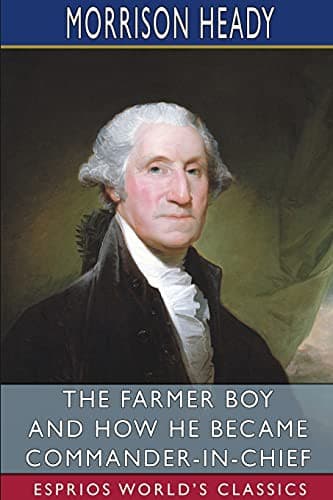
The Farmer Boy, and How He Became Commander-In-ChiefHeady, Morrison
History
The Farmer Boy, and How He Became Commander-In-Chief
Heady, Morrison
Washington, George, 1732-1799
Upon his return to Winchester, he was dismayed to find that the
English generals had taken it into their inexperienced heads to cut a
new road from Raystown to Fort Duquesne by the way of Laurel Hill,
instead of marching there at once by the old Braddock Road, as he
naturally supposed had been their intention from the beginning.
Foreseeing the consequences, he, in an earnest and forcible manner,
hastened to represent to them the difficulties and disadvantages of
such an undertaking. Cold weather would be setting in, he urged, long
before they could cut their way through so many miles of that mountain
wilderness to the point in question; and they would be obliged either
to winter at Laurel Hill, or fall back upon the settlements until
spring. This would give the enemy time to get full intelligence of
their threatened danger, and send to Canada for re-enforcements. Their
Indian allies too, as was their wont, would grow impatient at the long
delay that must needs attend this plan if carried out; and, returning
to their homes in disgust, would fail to render to the expedition
their valuable services as scouts and spies, as had been expected of
them. On the other hand, by taking the old road, they could march
directly to the fort; which, being at that time but feebly garrisoned,
must fall almost without a blow, and this, too, in less than half the
time, and with less than half the trouble and expense. This prudent
counsel, coming from one, who, from his knowledge of the country, had
so good a right to give it, was nevertheless overruled. The English
generals had gathered a most appalling idea of the difficulties and
dangers of this route from the account Braddock had given of it in his
letters. He had therein described it as lying through a region where
the mountains were of the highest and steepest, the forests of the
thickest and tallest, the rocks of the most huge and rugged, the
swamps of the deepest, and the torrents of the swiftest. The route for
the new road, on the contrary, according to the Pennsylvanians, who
saw in it a great advantage to themselves, lay through a region where
the mountains were not by far so lofty, the woods so thick, the rocks
so huge, the swamps so deep, nor the streams so swift, or half so
given to running rampant over their banks. All these advantages this
route had, besides being fifty miles shorter. So, under the mistaken
notion that more was to be gained by following a short road that would
take them a long time in getting over, than by following a long one
that would take them but a short time in getting over, they resolved
to cut the new road.
Public-domain text, read in full here on John Shaqi.
Reviews
Reviews
No reviews yet
Be the first to share your thoughts on this work.
Elsewhere in the archive
Join the Discussion
Join the discussion
Sign in to leave a comment or review.
Sign InorCreate an account