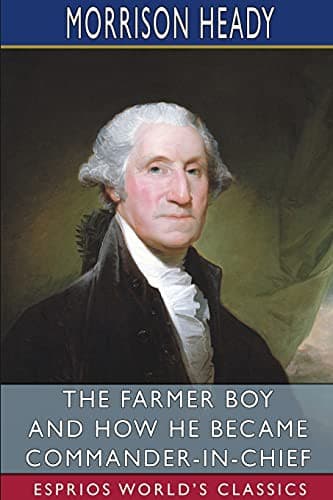
The Farmer Boy, and How He Became Commander-In-ChiefHeady, Morrison
History
The Farmer Boy, and How He Became Commander-In-Chief
Heady, Morrison
Washington, George, 1732-1799
Having done his part, and so large a part, towards the restoration of
quiet and security to his native province, the cherished object of his
heart, for which he had so faithfully and manfully struggled,
Washington resolved to bring his career as a soldier to a close. In
his very soul, he was sick and weary of strife, and longed for peace.
The scenes of violence and bloodshed had become loathing and painful
to him beyond the power of words to tell; and, now that his country
had no longer need of his services, he felt that he could, without
reproach, retire to the tranquil shades of private life he loved so
much, and had looked forward to with such earnest longings. He
therefore, at the end of the year, gave up his commission, and left
the service, followed by the admiration and affection of his soldiers,
and the applause and gratitude of his fellow-countrymen.
With the fall of Quebec in the course of the following year (1759),
this long and eventful Old French War was brought to a close, and
French empire in America was at an end.
XXII.
WASHINGTON AT HOME.
Having done all that a brave and prudent man could for his country's
welfare, Col. Washington now lost no time, you may depend upon it, in
doing what every wise and prudent man should for his own: by which you
are to understand, that on the sixth day of January, 1759, when he
wanted but a few weeks of completing his twenty-seventh year, he was
joined in the holy bonds of marriage with Mrs. Martha Custis, the
blooming and lovely young widow, and mother of the two interesting
little children,--to all of whom you had a slight introduction a short
time ago.
The nuptials were celebrated at the White House, the home of the
bride, in the presence of a goodly company of stately dames and fine
old gentlemen, fair maidens and handsome youth,--the kith and kin and
loving friends of the wedded pair. Had some belated traveller been
overtaken by the little hours of that night, as he chanced to pass
that way, he might have guessed, from the soft, warm light that shone
from all of the many windows, and sounds of sweet music that came
through the open doors, mingled with peals of joyous laughter, and the
light tripping of numerous feet in the merry dance, that it must be a
much-beloved and fortunate couple indeed that could draw together so
happy and brilliant a throng under that hospitable roof. Had this same
belated traveller wanted further proof of this, he had but to turn a
little aside, and take a peep into the negro quarters, where he would
have seen the colored folks in a jubilee over the grand occasion, and,
to all appearances, quite as jolly as if the wedding had been an
affair of their own getting-up, and in which each son and daughter of
ebony had a personal interest. He would have seen them feasting on the
abundant leavings that came down from the great house, till their
faces shone again; and dancing to the music of Bishop Braddock's
fiddle in a fashion all their own, and nobody's else.
Public-domain text, read in full here on John Shaqi.
Reviews
Reviews
No reviews yet
Be the first to share your thoughts on this work.
Elsewhere in the archive
Join the Discussion
Join the discussion
Sign in to leave a comment or review.
Sign InorCreate an account