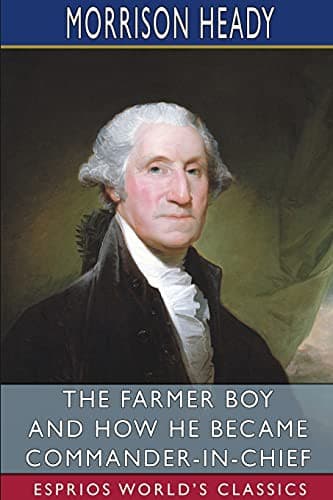
The Farmer Boy, and How He Became Commander-In-ChiefHeady, Morrison
History
The Farmer Boy, and How He Became Commander-In-Chief
Heady, Morrison
Washington, George, 1732-1799
Now, the East-India Company, to whom had been granted the sole
privilege of trading in tea for the space of a hundred years, if I
remember rightly, were greatly alarmed at the consequences of the
tea-tax. Enormous quantities of the article had begun to accumulate in
their London warehouses, now that there was no market for it in
America, which hitherto had fed the purse in their left-hand pocket,
as did that in Great Britain the larger one in their right-hand
pocket. "Something must be done," said they to themselves (they
certainly said it to nobody else),--"something must be done, or these
high-spirited women of America will drink their wishy-washy sassafras
till their blood be no thicker than whey, and the purse in our
left-hand pocket become as light and lean and lank as when we sent our
first ship-load thither years ago." This "something to be done" was a
loud petition to parliament, praying for speedy relief from the ruin,
which has an uncomfortable fashion of staring at great mercantile
companies, and was now staring them full in the face.
So, putting their heads together, the king and parliament hit upon an
ingenious plan, by which they, the East-India Company, could sell
their tea, and the government collect the duty thereon. It was this:
The price of the article should be so far reduced, that it would be
lower, even with the duty on it, than, at the usual rate of sale,
without any duty at all. This was a brilliant scheme indeed, and would
have succeeded to admiration, had the good people of America been a
nation of bats and geese; but, as they were not, the scheme failed
disgracefully, as you shall presently see.
By way of giving this plan a trial, a few ships loaded with tea were
sent over to Boston, where they lay for some time in the harbor,
without being permitted by the people to land their cargoes. One day,
as if to show the king and ministers and parliament, the East-India
Company, and the whole British nation, that they, the Americans, were,
and had been from the very beginning, desperately in earnest in all
that they had said and done for years past, a party, composed of about
fifty of the most sober and respectable citizens of Boston and the
country around, disguised themselves as Indians, and went aboard these
ships. Not a word was to be heard among them; but, keeping a grim and
ominous silence, they ranged the vessel from stem to stern, ransacked
their cargoes, broke open the tea-chests, and, pouring their contents
into the sea, made the fishes a dish of tea, which is said to have had
the same effect on them as on the rats and mice. This done with
perfect coolness and sobriety, the party returned to their homes as
orderly and silent as they had come; not the first movement towards a
mob or tumult having been made by the people during the whole
proceeding.
Public-domain text, read in full here on John Shaqi.
Reviews
Reviews
No reviews yet
Be the first to share your thoughts on this work.
Elsewhere in the archive
Join the Discussion
Join the discussion
Sign in to leave a comment or review.
Sign InorCreate an account