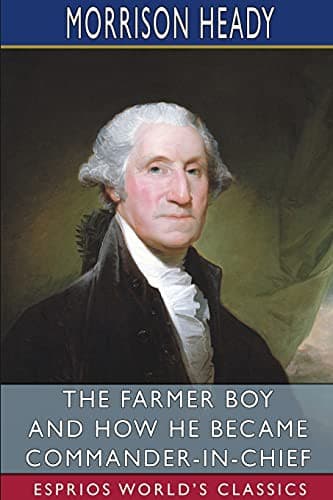
The Farmer Boy, and How He Became Commander-In-ChiefHeady, Morrison
History
The Farmer Boy, and How He Became Commander-In-Chief
Heady, Morrison
Washington, George, 1732-1799
Beholding how utterly had failed all their pet schemes for raising
revenue, the narrow-minded king, and the king-minded ministry, and the
many-minded parliament, were, so to speak, thrown on their haunches,
and forced to eat their own folly; which, I dare say, they found less
palatable than their roast beef and plum-pudding. In other words, they
repealed the Stamp Act; with one stroke of the royal pen, struck off
the taxes laid on the above-mentioned articles; and once more gave the
Colonies full liberty to manufacture whatsoever, and re-open
commercial intercourse with whomsoever, they chose. And thus this
non-importation agreement worked like a charm: it brought about in a
trice what petitions and remonstrances had failed to accomplish in
years.
When tidings came of what had been done at home, there was great
rejoicing throughout the provinces: the church-bells were tolled to
another tune than that with which they had been tolled a short time
before; the good people met at church, but this time to give thanks;
and went home, not to fast, but to feast; and were now quite as
comfortable as they had before been miserable. But I have gone a
little too far, however. There was one circumstance that greatly
dampened the general feeling of joy, and made a mere thanksgiving of
what might else have been a high-sounding jubilee. This was the tax on
tea, which had not been struck off along with the rest, but had been
suffered to remain; not that any great revenue was expected to arise
therefrom, but simply to show that they--the king and parliament--had
not disclaimed or yielded up the right to tax and burden the Colonies
when and how they thought fit and proper. This vexed the American
people sorely; for though the bulk of the nuisance had been taken
away, yet all the odor still remained: or, speaking more plainly, the
right of laying such burdens on themselves, of their own free will,
was still denied them; and this, in fact, was the very thing that made
it so intolerable for them to bear. "Is it," said Washington in a
letter to a friend, "the duty of threepence per pound upon tea that we
object to as burdensome? No; but it is the right to lay this duty upon
ourselves for which we contend."
Therefore, as far as the commodity tea was concerned, the people of
the Colonies still observed the non-importation agreement. From some
of the ports, the ships that had come over from England laden with
this delightful plant were sent back, without being suffered to
discharge their cargoes; in others, where it had been landed, it was
not allowed to be sold, but was stowed away in cellars and the like
out-of-the-way places, where it moulded, or became the food of rats
and mice, whose bowels, if we may trust the testimony of some of our
great-grandmothers, were so bound up thereby, that a terrible
mortality set in among them, that swept them away by cart-loads.
Public-domain text, read in full here on John Shaqi.
Reviews
Reviews
No reviews yet
Be the first to share your thoughts on this work.
Elsewhere in the archive
Join the Discussion
Join the discussion
Sign in to leave a comment or review.
Sign InorCreate an account