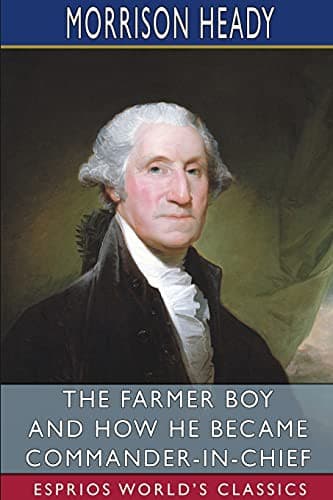
The Farmer Boy, and How He Became Commander-In-ChiefHeady, Morrison
History
The Farmer Boy, and How He Became Commander-In-Chief
Heady, Morrison
Washington, George, 1732-1799
As the war had now begun in earnest, so dreaded and deeply deplored by
all the good men, as the only remedy left to their distress, the
deliberations of the second Congress turned chiefly on the devising of
means for their defence and safety. Towards this object, nothing
effectual could be done till some person was fixed upon to be the
leader of the army, which they had yet, in large measure, to raise,
arm, and equip.
There were not a few, who, for age, talent, experience, fortune, and
social position, as well as for the sacrifices they had already made
to the cause, were, in the opinion of their friends, and perhaps in
that of their own, justly entitled to this high distinction. After
some time spent in viewing the matter in all its bearings, and
carefully weighing the claims of each, without being able to fix upon
a choice, John Adams decided the question by addressing the House to
the following effect: That the person intrusted with a place of such
importance to Americans must be a native-born American; a man of large
fortune, in order to give him a strong personal interest in the issue
of the contest, and the means of carrying it on; he should be a man of
military experience, and accustomed to the government of large bodies
of men; he should be of tried integrity and patriotism, of great
courage and bodily endurance, and known ability; and a resident of
some central province, that in him might be blended the extreme
interests of North and South, which would tend to lessen the
jealousies of the two sections, and harmonize them, as it were, into
one. Such a province was Virginia, and such a man was Col. Washington;
whom, therefore, he commended to the favor and consideration of the
Honorable House.
Before this address was ended, Washington, perceiving that he was the
person on the point of being singled out, rose from his seat, much
agitated and embarrassed, and hastily quitted the House.
Next morning, Mr. Adams's recommendation was acted upon; and the
House, without a single dissenting voice, chose GEORGE WASHINGTON to
be _Commander-in-chief_ of all the army of the United Colonies, with
the salary of six thousand dollars a year. In his reply, Washington
expressed his grateful sense of so signal a proof of the confidence
reposed in him by his countrymen, and added,--
"But lest some unfortunate event should happen, unfavorable to
my reputation, I beg that it may be remembered by every
gentleman in this room, that I this day declare, with the
utmost sincerity, that I do not think myself equal to the
command I am honored with. As to pay, I beg leave to assure the
Congress, that, as no pecuniary consideration could have
tempted me to accept of this employment at the expense of my
domestic ease and happiness, I do not wish to make any profit
of it. I will keep an exact account of my expenses: these, I
doubt not, they will discharge; and that is all I desire."
Public-domain text, read in full here on John Shaqi.
Reviews
Reviews
No reviews yet
Be the first to share your thoughts on this work.
Elsewhere in the archive
Join the Discussion
Join the discussion
Sign in to leave a comment or review.
Sign InorCreate an account