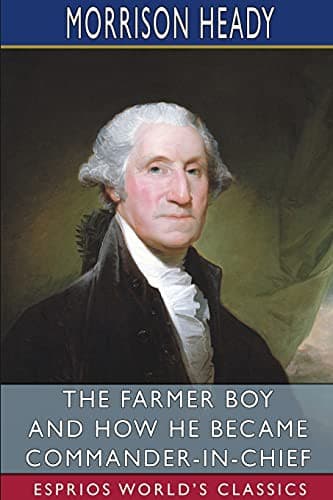
The Farmer Boy, and How He Became Commander-In-ChiefHeady, Morrison
History
The Farmer Boy, and How He Became Commander-In-Chief
Heady, Morrison
Washington, George, 1732-1799
And thus, my children, you have seen young Washington, at an age when
most boys are wasting their precious hours in idle sports, seeking to
acquire those habits of industry, punctuality, and method, which
afterwards enabled him so to economize time and labor as to do with
ease and expedition what others did with difficulty and tardiness. You
have seen him making the best use of the slender means within his
reach for storing his mind with those treasures of knowledge, and
schooling his heart in the daily practice of those exalted virtues,
which, after a life well spent and work well done, make good his title
to the name he bears,--the greatest and the wisest of human kind.
At last, the day came when George was to leave school for ever; and a
day of sorrow it was to his school-fellows, who parted from him with
many an affectionate wish, and, as we are told, even with tears; so
greatly had he endeared himself to them by his noble disposition,
gentle manners, and earnest desire to do as he would be done by, which
appeared in all his words and actions. In these regrets, Mr. Williams,
his worthy schoolmaster, also shared; and it gave him in after-life,
when his little George had become the great Washington, the most
heartfelt pleasure to say, that it had never been his privilege to
teach another pupil who could at all compare with him for diligence in
application, aptitude in learning, docility of disposition, manly
generosity, courage, and truth.
V.
IN THE WILDERNESS.
Extending from the Rappahannock to the Potomac, and stretching away
beyond the Blue Ridge far into the Alleghany Mountains, there lay at
this time an immense tract of forest land, broken only here and there
by a little clearing, in the midst of which stood the rude log-cabin
of some hardy backwoodsman. This large body of land--the largest,
indeed, ever owned by any one man in Virginia--was the property of a
great English nobleman named Lord Fairfax, an old bachelor of
eccentric habits and strange opinions, but of a highly cultivated
understanding, and, when it so pleased him, of polite and elegant
address. His stature was lofty,--far above that of the common run of
men. He was a keen sportsman, had a fund of whimsical humor, and, in
his odd way, showed himself possessed of a kindly and generous heart;
sometimes making a tenant or poor friend the present of a large farm,
without requiring any thing in return but a haunch of venison or a fat
wild turkey for his next Christmas dinner.
Public-domain text, read in full here on John Shaqi.
Reviews
Reviews
No reviews yet
Be the first to share your thoughts on this work.
Join the Discussion
Join the discussion
Sign in to leave a comment or review.
Sign InorCreate an account