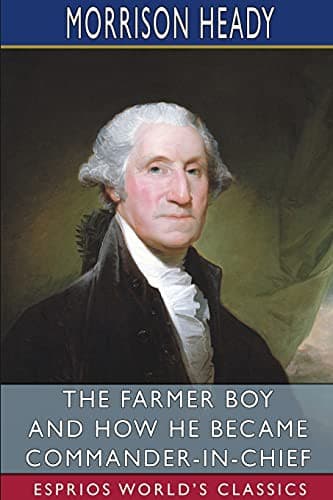
The Farmer Boy, and How He Became Commander-In-ChiefHeady, Morrison
History
The Farmer Boy, and How He Became Commander-In-Chief
Heady, Morrison
Washington, George, 1732-1799
They were soon, in the depths of the wilderness, miles beyond the most
distant frontier settlements. The snows of winter that still lingered
on the mountains, warmed by the softer airs of early spring, had
melted so rapidly of late as to swell the forest streams to a degree
that rendered their fording often difficult, and even sometimes
dangerous. Now and then, coming to a stream which had overflowed its
banks, the little party would be obliged to construct a raft of logs,
roughly lashed together with grape-vines, upon which they could push
to the opposite side, without getting their baggage wet, and, at the
same time, compel their horses to swim along behind. Their way was
often obstructed by the trunks and branches of fallen trees, thickets
tangled and dense and thorny, huge and rugged rocks, and treacherous
swamps, covered with long, green grass, into which the horses,
stepping unawares, would suddenly plunge up to the saddle-girths in
water and mire.
For some time, they lodged in wigwams or huts, rudely framed of poles,
and covered with the bark of trees; which served the purpose well
enough when the weather was dry and still, but were often beaten down
and overturned by the winds and rains when their shelter was most
needed. After two or three of these rickety shanties had been tumbled
about their heads, to the no small risk of life or limb, they wisely
concluded to abandon them, and sleep in the open air, with the
twinkling stars above them, the gray old trees around them, and the
damp, cold ground beneath them, with nothing between but their good
blankets, and the dead, dry leaves of autumn heaped together; and
lucky was he who got the place nearest the fire, or could put the
mossy trunk of a fallen tree between him and the biting blast, or,
better still, could boast a bearskin for his bed. A little before
sunset, they would halt for the night in some sheltered spot,
convenient to a running stream; where, turning their horses loose to
graze till morning, they would build a cheerful fire of the dry
brushwood close at hand, and prepare their evening meal, which they
would eat with a keenness of appetite known only to the tired and
hungry hunter. Each man was his own cook; their food consisting
chiefly of venison and wild turkey their rifles procured them, and
fish drawn from the neighboring brook, which they would broil on the
glowing coals, fastened to a forked stick instead of a spit, and then
eat it from a maple chip, instead of a dish. If the season permitted
them to add to this a hatful of berries that grew on the sunny side of
the hill, or acorns from the mountain-oak, or nuts from the
hickory-tree, or, more delicious still, plums, persimmons, and
pawpaws, that grew in the more open parts of the woods, they made of
it a dainty feast indeed.
Public-domain text, read in full here on John Shaqi.
Reviews
Reviews
No reviews yet
Be the first to share your thoughts on this work.
Join the Discussion
Join the discussion
Sign in to leave a comment or review.
Sign InorCreate an account