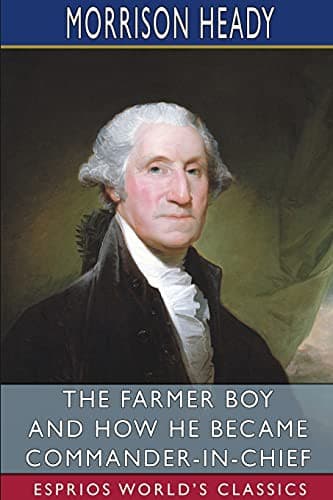
The Farmer Boy, and How He Became Commander-In-ChiefHeady, Morrison
History
The Farmer Boy, and How He Became Commander-In-Chief
Heady, Morrison
Washington, George, 1732-1799
Thus the dreary night wore away; and, when the dreary morning dawned,
they destroyed the artillery and the military stores, preparatory to
their setting forth on their retreat. As all the horses had been
killed or lost the day before, they had no means of removing their
heavy baggage: they therefore secured it as best they might, hoping to
be able to send back for it from the settlements. Still in possession
of their small-arms, they then marched out of the fort with all the
honors of war,--fifes playing, drums beating, and colors flying. They
had gone but a few yards from the fort, when a large body of Indians
pounced with plundering hands upon the baggage. Seeing that the French
could not or would not keep them back, Washington, to disappoint them
of their booty, ordered his men to set fire to it, and destroy all
they could not bring away upon their backs.
This done, they once more took up their line of march; and a
melancholy march it was. Between them and the nearest settlements,
there lay seventy miles of steep and rugged mountain-roads, over which
they must drag their weary and aching limbs before they could hope to
find a little rest. Washington did all that a kind and thoughtful
commander could to keep up the flagging spirits of his men; sharing
with them their every toil and privation, and all the while
maintaining a firm and cheerful demeanor. Reaching Wills's Creek, he
there left them to enjoy the full abundance which they found awaiting
them at that place; and, in company with Capt. Mackay, repaired at
once to Williamsburg to report the result of the campaign to Gov.
Dinwiddie.
A short time after, the terms of surrender were laid before the
Virginia House of Burgesses, and received the entire approval of that
wise body; who, although the expedition had ended in defeat and
failure, most cheerfully gave Col. Washington and his men a vote of
thanks, in testimony of their having done their whole duty as good and
brave and faithful soldiers.
XIV.
GENERAL BRADDOCK.
Having brought the campaign to an honorable if not successful end,
Col. Washington threw up his commission, and left the service. This
had been his determination for some time past; and he felt that he
could do so now without laying his conduct open to censure or
suspicion, having within his own breast the happy assurance, that, in
the discharge of his late trust, he had acted the part of a faithful
soldier and true patriot, seeking only his country's good. The reasons
that led him to take this step need not be repeated, as you will
readily understand them, if you still bear in mind what I told you a
short time since touching those questions of rank which caused the
difficulty between him and Capt. Mackay.
Public-domain text, read in full here on John Shaqi.
Reviews
Reviews
No reviews yet
Be the first to share your thoughts on this work.
Elsewhere in the archive
Join the Discussion
Join the discussion
Sign in to leave a comment or review.
Sign InorCreate an account