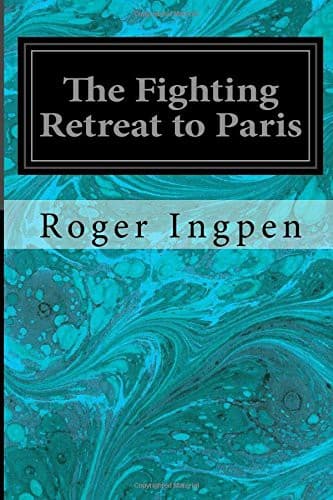
World War, 1914-1918 -- Campaigns -- Western Front
I was wounded at this point by a bullet from a maxim gun. I
staggered at the time, thinking my hand had been blown off; but
I recovered and kept on the run, and got in a trench, where I
bandaged myself up. From there I continued to retire on my own,
as I had lost touch with my section. I ran into the general
commanding, and he asked me what was the matter with me. I told him
I was wounded, and he said, “For God’s sake, man, don’t go into the
hospital; they are blowing it up now.” I did not want telling that
twice, and I started to track down country to get into touch with
the column, where I knew the ambulance men were, and they would
dress my wound.
When I got to the ambulance wagons I found they were mostly full
with wounded who were in a far worse plight than I was. So I went
along with the column, and a motor lorry came by and I got a lift
to St. Quentin.
“So awful was the fighting that it is wonderful that anybody ever
came out of it alive. I have no idea how we did come through,” said a
wounded corporal of the Royal Engineers.
The corporal and his comrades were ordered to build a pontoon bridge
over the Mons Canal. This work was begun early on the Sunday morning,
August 23, in the face of a murderous rifle and shell fire. Gradually
the bridge was pushed over, until it was almost within touch of the
bank held by the enemy. Man after man of the British Engineers was
hit, but still the rest stuck to their task, heedless of the rain of
missiles all around.
Late in the afternoon the corporal was standing in the water assisting
in the construction, when a shrapnel shell wounded him in the right
arm. He made for the bank, only to find that his boots, which he
had removed, had disappeared. He bound up his wounded arm with his
handkerchief, and soon afterwards work on the bridge was abandoned.
Orders were given to get to cover the best way possible, and to
wait until darkness fell. Then our troops fell back owing to the
overwhelming numbers of the Germans. The corporal removed his putties,
bound them round his feet, and started to retire. In the darkness,
however, he lost the main body of the British, and wandered away to the
west.
After a while he met a wounded Gordon Highlander, who had had his teeth
shot away, and was also lost. The Highlander bound up the Engineer’s
arm with his first field dressing, and the two men snatched what sleep
they could under a hedge. Their breakfast next morning was a raw swede,
pulled up from one of the fields.
Throughout that day they trudged on and on through a deserted country,
but as night fell they came to some cottages scattered on the roadside.
The inhabitants, recognising them as British, welcomed the wanderers,
and gave them a good meal of bread and butter, cheese, and rabbit. They
also allowed the soldiers to sleep there that night, and early in the
morning directed them to Boussu, a town some miles further on in the
direction of Lille.
Public-domain text, read in full here on John Shaqi.
Reviews
Reviews
No reviews yet
Be the first to share your thoughts on this work.
Join the Discussion
Join the discussion
Sign in to leave a comment or review.
Sign InorCreate an account