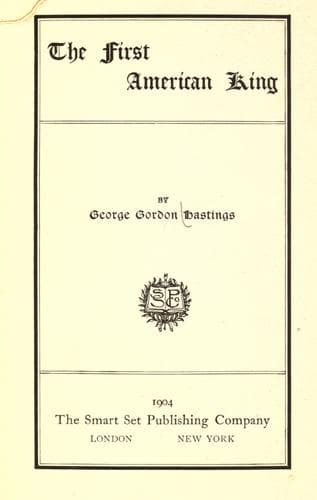
Science fiction; Speculative fiction; United States -- Politics and government -- Fiction
“Tut! Tut! The People!” exclaimed the Colonel contemptuously. “How much
had they to say in the matter! The power of the People is one of those
cant phrases, founded on a popular delusion, which have always existed.
In theory, the power of the People is supreme; in reality, a myth.
Take it during the past two thousand years. In all these centuries the
great masses of the people have been poor, hardworking; their lives
replete with stint and suffering. The Few have been rich, pampered,
over-indulged and contented. Do you think the masses of the People
were really satisfied with this order of things? Do you not believe
that they, both as individuals and as a mass, would infinitely have
preferred a more even distribution of the good things of this world?
At any time and in any country, these masses, had they been organized
and united in purpose, could in a day have changed the conditions and
brought about this coveted distribution. But they never have been so
organized and united, and the special class has ever governed the
masses. True, there were your labor unions and your great strikes.
Contractors and employers, great and small, were bullied and at times
even beaten in the various struggles which ensued, but this really
amounted to nothing. Whenever the People really began to grow dangerous
and to threaten the existing order of things, the soldiers came
forth--soldiers, mark you, drawn from the masses--and the trouble was
promptly put an end to.”
“But how about the popular vote?” inquired the Professor.
“The popular vote,” echoed the Colonel with a sneer. “Another delusion!
One set of professional politicians set up a platform against another
platform devised by another set of professional politicians and both
invite the popular vote. The good people would vote for the one, or
for the other; but how much was the popular interest, or the popular
will, really represented by either? It is true that from time to
time reformers sprang up and sought to create new parties and new
issues more closely representative of the popular weal and the popular
will. How much headway did they make? Defeat by the trained political
organizations, commanding ample means and patronage, was invariably the
ultimate fate of any such efforts. The really able man preferred to
accept the existing conditions and make the best of them. He realized
the futility of such undertakings and understood that the rôle of
Reformer and the rôle of Martyr were only too closely allied.”
“But in a supreme question,” objected the Professor, “such as the
overthrow of the Republic, I should have thought that a naturally free,
assertive people, such as the people of the United States, would have
made their power felt.”
Public-domain text, read in full here on John Shaqi.
Reviews
Reviews
No reviews yet
Be the first to share your thoughts on this work.
Join the Discussion
Join the discussion
Sign in to leave a comment or review.
Sign InorCreate an account