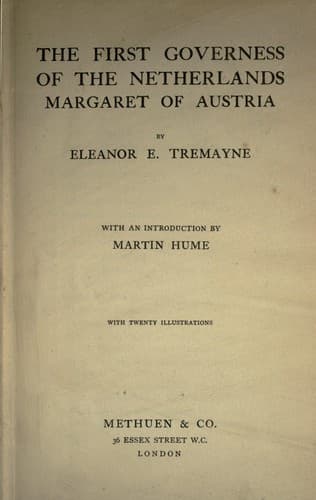
The First Governess of the Netherlands, Margaret of AustriaTremayne, Eleanor E.
History
The First Governess of the Netherlands, Margaret of Austria
Tremayne, Eleanor E.
Margaret, of Austria, Regent of the Netherlands, 1480-1530; Netherlands -- History -- Charles V, 1506-1555
'VERY DEAR AND WELL BELOVED,--It has pleased the emperor, my
lord and grandfather, to emancipate us and free us from his
guardianship and regency, placing the government of our country
and lordships... in our hands, and consenting that we be
received and sworn to the principality and lordship of the
same.... Therefore it is fit and reasonable that all things
which concern our rights, greatness, lordship, and even the
doing of justice and our other affairs, should be conducted
henceforth in our name and under our title. For this cause we
write to you; we require and command that all letters, acts, and
other things which will be done and expedited towards you for
our aforesaid affairs, shall be drawn up and despatched under
our aforesaid name and title, placing at the end of the letters:
Given under the seal which the emperor, my lord and grandfather,
and we have used during the time of our minority....
'CHARLES (1515)'
In addressing the deputies from the States-General Charles made the
following speech: 'Gentlemen, I thank you for the honour and great
affection you bear me. Be good and loyal subjects, and I will be your
good prince.'
Margaret does not appear to have been consulted about Charles's
emancipation until it was an accomplished fact, and we can well
understand that, accustomed as she had been to exercise sovereign
power for eight years, she felt some secret anxiety in seeing this
power taken from her. Monsieur de Croy, Seigneur de Chièvres, had
always opposed the princess's administration, and was anxious to
exclude her from the government; it was therefore an added blow to
know that he would now, as Charles's counsellor, be in a position to
deprive her of her nephew's confidence.
Margaret no longer presided at the State Council, and was only
appealed to as a matter of form. The emperor's letters were not
communicated to her, and she even heard rumours that she was accused
of personal avarice and of having been unsuccessful in her rule. She
keenly resented these accusations and complained to her father, and
also addressed a memorandum to her nephew containing a sketch of her
government, and accounts, with a full list of the gifts and payments
made out of her private income.
Public-domain text, read in full here on John Shaqi.
Reviews
Reviews
No reviews yet
Be the first to share your thoughts on this work.
Elsewhere in the archive
Join the Discussion
Join the discussion
Sign in to leave a comment or review.
Sign InorCreate an account