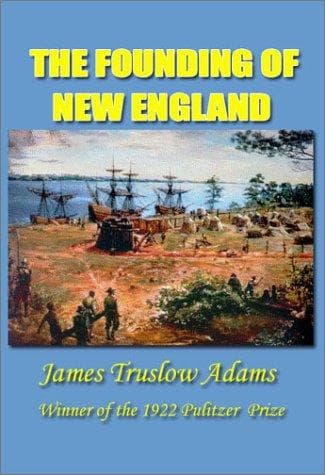
New England -- History -- Colonial period, ca. 1600-1775
The captain was Christopher Jones, and not the Captain Thomas Jones of
unsavory memory. J. R. Hutchinson, “The Mayflower, her Identity and
Tonnage,” _New England Historical and Genealogical Register_, vol.
LXX, pp. 337-42. Also Usher, _Pilgrims_, p. 72. The ship is thought to
have been in the wine trade for several years; and as a wine ship was
known among sailors as a “sweet” ship, this may have had something to
do with the remarkable health of the Pilgrims on the voyage. For
disease on shipboard during that period, _cf._ Oppenheim,
_Administration of the Royal Navy_, vol. I, p. 136. Drake on his
famous voyage lost 600 out of a crew of 2,300.
Footnote 216:
Bradford, _Plymouth_, pp. 42, 60.
Footnote 217:
John Robinson, _Works_ (Boston, 1851), vol. I, p. 39.
Footnote 218:
Robinson, _Works_, vol. I, p. 40. The italics are mine. _Cf._ Buckle,
_History of Civilization_, vol. I, p. 337: “In every Christian country
where it [toleration] has been adopted, it has been forced upon the
clergy by the authority of the secular classes.”
Footnote 219:
Winslow, in Young, _Chronicles_, p. 397. Dr. H. M. Dexter has
vigorously attacked the idea of Robinson's having been broad-minded in
the modern sense, and thinks his words refer only to church discipline
and not to belief. _Congregationalism in the last 300 Years_, pp. 400
_ff._ From a study of Robinson's writings, I cannot agree with him.
_Cf._ Davis (_John Robinson_, pp. 241-65), who also disagrees with
Dexter; and the very just estimate by H. H. Henson, _Studies in
Religion in the 17th Century_ (London, 1903), pp. 234 _ff._; and W. W.
Fenn, “John Robinson's Farewell Address,” _Harvard Theological
Review_, July, 1920, pp. 236 _ff._
Public-domain text, read in full here on John Shaqi.
Reviews
Reviews
No reviews yet
Be the first to share your thoughts on this work.
Elsewhere in the archive
Join the Discussion
Join the discussion
Sign in to leave a comment or review.
Sign InorCreate an account