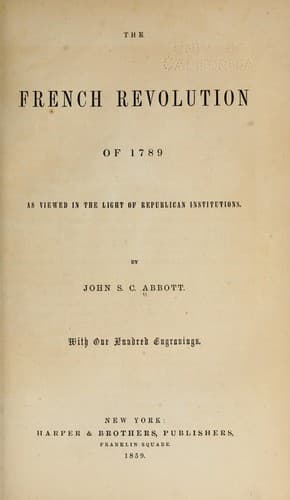
The French Revolution of 1789, as Viewed in the Light of Republican InstitutionsAbbott, John S. C. (John Stevens Cabot)
History
The French Revolution of 1789, as Viewed in the Light of Republican Institutions
Abbott, John S. C. (John Stevens Cabot)
France -- History -- Revolution, 1789-1799
An utterly exhausted treasury compelled Louis XVI. and the court
of France to call together the States-General. The deputies of the
people, triumphing over the privileged classes, resolved themselves
into a National Assembly, and then proceeded to the formation of a
constitution which should limit the hitherto despotic powers of the
crown. Though there were a few individuals of the nobles and of the
higher clergy who cordially espoused the popular cause, the great mass
of the privileged class clung firmly together in desperate endeavors
to regain their iniquitous power. Many of these were now emigrants,
scattered throughout Europe, and imploring the interference of foreign
courts in their behalf. The old royalist army, some two hundred
thousand strong, amply equipped and admirably disciplined, still
retained its organization, and was still under its old officers, the
nobles; but the rank and file of this army were from the people, and
their sympathies were with the popular cause.
The nobles were now prepared for the most atrocious act of treason.
They wished to surrender the naval arsenals of France to the English
fleet, so that England, in possession of the great magazines of war,
could throw any number of soldiers into the kingdom unresisted, while
the Prussians and Austrians, headed by the emigrant noblesse, should
invade France from the east. The English government, however, which
subsequently became an accomplice in the conspiracy of the French
nobles, by accepting the surrender of Toulon, was not yet prepared to
take the bold step of invading France simply to rivet the chains of
despotism upon the French people.
The English embassador, Dorset, who was residing at Versailles,
revealed the plot to the ministers of the king. They, however, kept
the secret until it was disclosed by an intercepted letter from Dorset
to the Count d'Artois (subsequently Charles X). This discovery vastly
increased the alarm of the nation. Perils were now multiplying on
every side. The most appalling rumors of invasion filled the air.
Bands of marauders, haggard, starving, brutal, swept over the country,
burning, devouring, and destroying. It was supposed at first that they
were the advance battalions of the invaders, sent by the emigrants to
chastise France into subjection. Alarm increased to terror. Mothers
in almost a delirium of fear sought places of concealment for their
children. The peasant in the morning ran to his field to see if it had
been laid waste. At night he trembled lest he should awake to behold
conflagration and ruin. There was no law. The king's troops were
objects of especial dread. The most insolent of the nobles were in
command, and with money and wine they sought to bribe especially the
Germans and the Swiss to be obedient to their wishes.
Public-domain text, read in full here on John Shaqi.
Reviews
Reviews
No reviews yet
Be the first to share your thoughts on this work.
Elsewhere in the archive
Join the Discussion
Join the discussion
Sign in to leave a comment or review.
Sign InorCreate an account