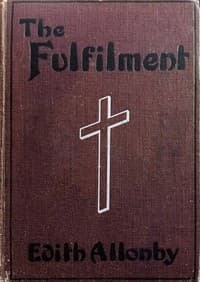
Fantasy fiction; Heaven -- Fiction; Hell -- Fiction; Unfinished books
The whole of the service he walked about, never still, yet always
watching. The smile never left his lips as he glided from pillar to
pulpit, and he joined in every ‘Amen’ and led the Creed, even before
the pastor. As the last blessing was being pronounced he went up into
the pulpit and beckoned me to follow. I went, and we looked down upon
the vast gathering. He leant upon the Bible and studied them. Suddenly
the brilliant lights went out, and in the total darkness a harsh red
light began to rise. Beneath us every form had changed, and hideous
demons were shouting, and gesticulating, and leaping from pew to pew.
At last the whole church crashed down like a well-built pack of cards
which has stood some pretty strong rebuffs, and upon the shattered
ruins stood the Spirit who accompanied me: like some great god, one
foot upon the broken crucifix and one upon the topmost fallen spire.
Every wretched soul fled out into the darkness, and he, remaining,
laughed aloud.
Then he turned to me those deep, inhuman eyes, flashing with brilliant
fire.
“Was I wrong?” Plucritus asked, and laughed again. “I shall not be
judged. The merciful Master who excuses one, excuses all. Take me to
that God above myself, that blind power, who year by year and century
by century allows himself to be befooled, and fools.
“Let me see the four and twenty elders and the beasts with eyes, let
me see the horses dashing o’er the ground, and view that lamb—that
little bleating lamb—that sits beside Him on the throne. Let me hear
the senseless Hallelujahs! and the fanatic cry. Let me see the coarse
and vulgar flatterers who crowd around, more fulsome than the meanest
courtier that ever crawled towards a monarch’s throne. Take me to this
God Almighty, this God all-powerful, this God all-merciful, this God
all-seeing and all-hearing. This God all Truth and God all lies. This
Power omnipotent. This Is and Am and Ever-shall-be from Was eternal.
Take me to Him and let me look at Him, if not from the front, then from
the back, for I have never seen Him.”
I watched him at every line he spoke, and saw the gibe and sneer that
marked each sentence.
“You blame them for that which you yourself have formulated.”
“Not I. I blame them for their tawdriness, their mockery, their
arrogant vulgarity. It is none of me nor mine.”
“Yet it is the result of your work.”
He laughed scornfully, then answered whimsically, “But God made me.
His is the greater sin. For I am like the disrespectful son, who, when
accused of ill, speaks of heredity, and blames his father. For I was
good until I sinned, and when I sinned I looked into the past life of
him who made me, and I found that all was quite respectable and quiet,
and the paternal smile still beamed the milder, hiding the devil’s
frown which feared detection underneath.”
He stood still looking round and laughing.
Public-domain text, read in full here on John Shaqi.
Reviews
Reviews
No reviews yet
Be the first to share your thoughts on this work.
Elsewhere in the archive
Join the Discussion
Join the discussion
Sign in to leave a comment or review.
Sign InorCreate an account