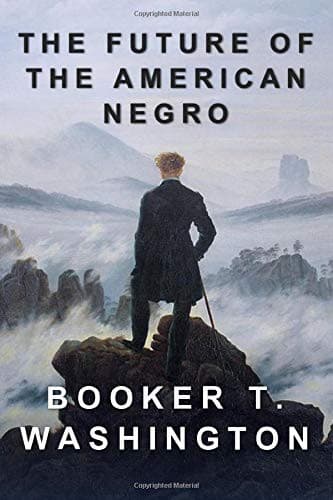
The Future of the American NegroWashington, Booker T.
History
The Future of the American Negro
Washington, Booker T.
African Americans
During the four years that the Civil War lasted, the greater
proportion of the Negroes remained in the South, and worked faithfully
for the support of their masters' families, who, as a general rule,
were away in the war. The self-control which the Negro exhibited
during the war marks, it seems to me, one of the most important
chapters in the history of the race. Notwithstanding he knew that his
master was away from home, fighting a battle which, if successful,
would result in his continued enslavement, yet he worked faithfully
for the support of the master's family. If the Negro had yielded to
the temptation and suggestion to use the torch or dagger in an attempt
to destroy his master's property and family, the result would have
been that the war would have been ended quickly; for the master would
have returned from the battlefield to protect and defend his property
and family. But the Negro to the last was faithful to the trust that
had been thrust upon him, and during the four years of war in which
the male members of the family were absent from their homes there is
not a single instance recorded where he in any way attempted to
outrage the family of the master or in any way to injure his property.
Not only is this true, but all through the years of preparation for
the war and during the war itself the Negro showed himself to be an
uncompromising friend to the Union. In fact, of all the charges
brought against him, there is scarcely a single instance where one has
been charged with being a traitor to his country. This has been true
whether he has been in a state of slavery or in a state of freedom.
From 1865 to 1876 constituted what perhaps may be termed the days of
Reconstruction. This was the period when the Southern States which had
withdrawn from the Union were making an effort to reinstate themselves
and to establish a permanent system of State government. At the close
of the war both the Southern white man and the Negro found themselves
in the midst of poverty. The ex-master returned from the war to find
his slave property gone, his farms and other industries in a state of
collapse, and the whole industrial or economic system upon which he
had depended for years entirely disorganised. As we review calmly and
dispassionately the period of reconstruction, we must use a great deal
of sympathy and generosity. The weak point, to my mind, in the
reconstruction era was that no strong force was brought to bear in
the direction of preparing the Negro to become an intelligent,
reliable citizen and voter. The main effort seems to have been in the
direction of controlling his vote for the time being, regardless of
future interests. I hardly believe that any race of people with
similar preparation and similar surroundings would have acted more
wisely or very differently from the way the Negro acted during the
period of reconstruction.
Public-domain text, read in full here on John Shaqi.
Reviews
Reviews
No reviews yet
Be the first to share your thoughts on this work.
Join the Discussion
Join the discussion
Sign in to leave a comment or review.
Sign InorCreate an account