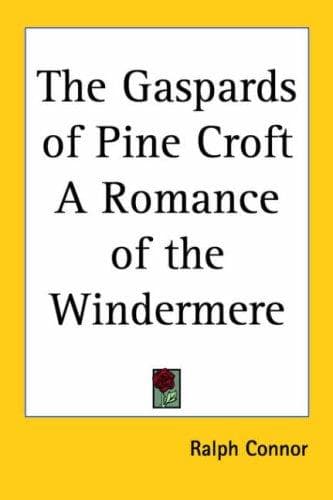
The Gaspards of Pine Croft: A Romance of the WindermereConnor, Ralph
General
The Gaspards of Pine Croft: A Romance of the Windermere
Connor, Ralph
British Columbia -- Fiction; Canadian fiction -- 20th century
The man stood listening, held as by a spell. The anger passed from his
face. In its place came in swift succession relief, surprise,
perplexity, shame, humiliation. Before her superb self-abnegation he
stood self-condemned, mean, contemptible. He could find no words. This
girl who had in those careless days so long ago worshipped him as a god
and given herself to him with never a care or question had changed into
a woman, his equal in truth of feeling, in sense of right. Here she was
asking his solution of a problem that was his before it was hers, and
his more than hers. The boy? The little chap standing up straight on
sturdy legs, gazing at him with piercing, solemn, appraising eyes—his
boy? His heart gave a queer little quiver. Indian or white man?
Condemned to be hunted back beyond the horizon of civilisation? Or
trained, fitted for a chance for life among men? Never in his life had
his thoughts raced through his mind as today in the presence of this
girl, this grave, controlled woman by whose very calmness he stood
accused and condemned as by a judge upon the bench. For his very life,
with those clear, calm eyes reading his soul, he could make no answer.
There was no answer in his mind. His first thought had been that the
Indian woman should simply disappear from his world and find a home with
her own people. But as he listened to her quiet and reasoned appeal in
her quaintly picturesque speech, the product of the mission school, and
as he looked upon her face, alight with clear-seeing intelligence, aglow
with the divine light of motherhood and distinguished with a beauty
beyond any he had ever known, the solution which first suggested itself
to his mind somehow failed to satisfy. Then, too, the boy, the little
boy—his little son—for whom he was responsible before God—yes, and, if
it were known to them, before all honourable men, and that meant in his
own sight. Was man ever so cornered by fate, nay, by his own doings?
“I will see you tomorrow, Onawata,” he said more gently. “I will come to
your camp tomorrow.” He laid his hand upon her shoulder. At his touch
and at the change in his voice, the woman was transformed, as if in a
single moment the world should pass from the cold beauty of winter to
the warm living glory of a midsummer day. Under the brown skin the red
blood surged, rich and full, lending warmth and color to the cold beauty
of her face. The rigid lines in her slim straight body suddenly seemed
to melt into soft curves of winsome grace. The dark steadfast eyes grew
soft as with a yearning tenderness. With a little shuddering sigh she
sank upon the pine needles, her hands fluttering up toward him.
“Ah, ah, Wa-ka-no-ka” (Hunter with the Golden Hair), she said, with a
long sobbing cry. “Do not speak so to me, do not touch me, or I cannot
go back. Ah, how can I leave you unless you hate me?”
She swayed forward toward him, flung her arms about his ankles and held
him fast, sobs deep drawn shaking her body.
Public-domain text, read in full here on John Shaqi.
Reviews
Reviews
No reviews yet
Be the first to share your thoughts on this work.
Join the Discussion
Join the discussion
Sign in to leave a comment or review.
Sign InorCreate an account