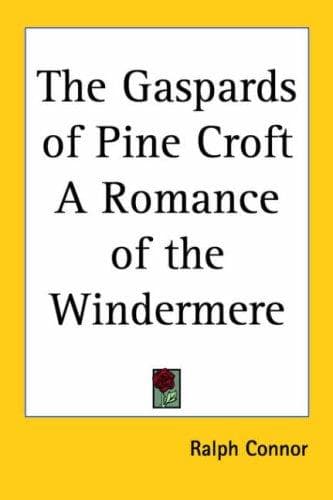
The Gaspards of Pine Croft: A Romance of the WindermereConnor, Ralph
General
The Gaspards of Pine Croft: A Romance of the Windermere
Connor, Ralph
British Columbia -- Fiction; Canadian fiction -- 20th century
The chief glanced sharply at the little lad. “Huh! I go find him,” he
said abruptly. He called his men. Together they consulted, apparently
canvassing the situation and planning the search. Then, with swift
expedition, they prepared for their tramp. In a very few minutes the
chief and one of his men stood ready for their journey, the other man
remaining in camp with the child. Before setting forth, the chief came
to the boy.
“You go mother,” he said. “Good woman! Two day father he come back.
Sure, two day. Tell mother. Good woman. Chief not forget baby.”
“Oh, thank you, Chief,” said the little boy, impulsively catching his
hand. “I’ll tell Mother. She will be awfully thankful to you. Good-bye.
Everything will be right now.”
“Huh!” grunted the chief, and with a wave of the hand he was gone.
“Hello, little one,” Paul called, catching sight of the Indian child
standing shyly within the tent door. “Come on over here. Come on and see
my pony.”
The child, with a fearlessness quite unusual among Indian children, came
trotting to him. Paul was delighted to find he was not forgotten.
“I say, little chap, tell me your name again,” he said, dropping on his
knees beside the youngster. The little chap gurgled a reply. “What is
it?” Again a gurgle. Paul gave an answering gurgle. “Is that it?”
The stolid face of the Indian standing near suddenly broke into a grin.
“Him name Peter,” he said, with a struggle.
“Peter,” shouted the boy, with a delighted laugh. “And I’m Paul. Oh,
isn’t that funny? Peter and Paul! Why, we are two Apostles.” He caught
up the little child and danced about with him in high glee, and the glee
of the little one was no less high. Then for half an hour the
grave-faced Indian looked upon a scene that more than once broke up his
gravity. For with all sorts of games and antics the white boy tumbled
the other about upon the grass, driving him into shrieks of delighted
laughter, such as in his rather sombre four years of life in the wigwam
with his stolid seniors he had never been known to utter. In the full
tide of his play Paul remembered his duty.
“Here, Peter, old chap, I must get away home,” he cried, rolling off
from his back the little Indian who had been using him as a pony.
“Good-bye. I’ll see you again soon.”
But a fierce howl of protest brought him back running. It was only after
he had emptied his pockets of his treasures, a top, a knife, some
peppermints, somewhat the worse for wear but none the less toothsome to
Peter, impervious to the microbe terror, that he was able to make his
escape in an atmosphere of smiling serenity.
Public-domain text, read in full here on John Shaqi.
Reviews
Reviews
No reviews yet
Be the first to share your thoughts on this work.
Join the Discussion
Join the discussion
Sign in to leave a comment or review.
Sign InorCreate an account