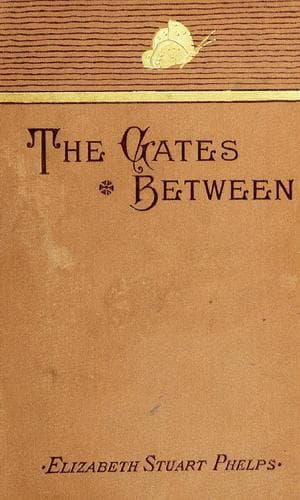
Christian fiction; Future life -- Fiction; Spiritualism -- Fiction
It ought to be said, at this point in my story, that I had never been
what would be called an even-tempered man. Truth to tell, I was a
spoiled boy. My mother was a saint, but she was a soft-hearted one.
My father was a scholar. Like many another boy of decided
individuality, I came up anyhow. Nobody managed me. At an early age
my profession made it my duty to manage everybody else. I had a
nervous temperament to start on; neither my training nor my occupation
had poised it. I do not think I was malicious nor even ill-natured.
As men go, I was perhaps a kind man. The thing which I am trying to
say is, that I was an irritable one.
As I look back upon the whole subject I can see, from my present point
of view, that this irritability had seldom struck me as a personal
disadvantage. I do not think it usually makes that impression upon
temperaments similarly vitiated. As nearly as I can remember, I
thought of myself rather as the possessor of an eccentricity, than as
the victim of a vice. My father was an overworked college
professor,--a quick-tempered man; my mother,--so he told me with
streaming tears, upon the day that he buried her,--my mother never
spoke one irritated word to him in all her life: he had chafed and she
had soothed, he had slashed and she had healed, from the beginning to
the end of their days together. A boy imitates for so many years
before he reflects, that the liberty to say what one felt like saying
appeared to me a mere identification of sex long before it occurred to
me that mine might not be the only sex endowed by nature with this form
of expression. I regarded it as one regards a beard, or a
waistcoat,--simple signs of the variation of species.
My mother--Heaven rest her sweet soul--did not, that I recall,
obviously oppose me in this view. After the time of the first
moustache she obeyed her son, as she had obeyed her husband.
As has been already said, the profession to which I fell heir failed to
recommend to me a different personal attitude toward the will of
others. My sick people were my pawns upon the chess-board of life. I
played my game with humane intentions, not wholly, I believe, with
selfish ones. But I suffered the military dangers of character,
without the military apologies for them. He whose duty to God and men
requires him to command all with whom he comes in contact should pray
God, and not expect men, to have mercy on his soul.
It is possible, I do not deny, that I put this view of the case without
what literary critics call "the light touch." It is quite possible
that I emphasize it. Circumstances have made this natural; and if I
need any excuse for it I must seek it in them. Whether literary or
not, it is not human to cherish a light view of a heavy experience.
Public-domain text, read in full here on John Shaqi.
Reviews
Reviews
No reviews yet
Be the first to share your thoughts on this work.
Join the Discussion
Join the discussion
Sign in to leave a comment or review.
Sign InorCreate an account