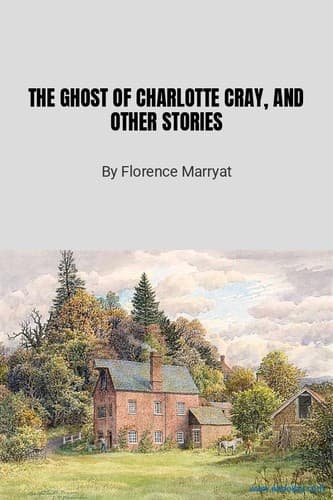
The ghost of Charlotte Cray, and other storiesMarryat, Florence
Science
The ghost of Charlotte Cray, and other stories
Marryat, Florence
English fiction -- 19th century; Ghost stories, English; Short stories, English
But in another moment we are undeceived, for the shrill, vixenish
voice of a woman (may dogs dance upon her grave!) exclaims sharply
from the open door, “_Fermez, fermez; on ne peut pas entrer_.” The
child obediently claps it to in our faces, and we retrace our steps,
with a conviction that the lady is like her castle--more strong than
beautiful. E--is so disgusted that he will not even sketch the ruins
from the opposite side of the road, up which another precipitous path
leads us to a long walk, which in summer must be a perfect bower, from
the interlacing of the branches of the trees with which it is
bordered; and from which we have a far better view of the ruins than
the utmost politeness of their owner could have afforded us. But no;
judgment has gone out against them; we decide they are heavy and
unpicturesque, and not worth the trouble; and we walk on in hopes of
finding something better: and are rewarded. At the close of the long
overshadowed walk, a quaint little chapel, beside which stands a
painted wooden crucifix nearly the size of life, excites our
curiosity, and, walking round it, we come upon one of the loveliest
scenes, even in the month of February, that Nature ever produced.
A green valley, creeping in sinuous folds between two ranges of high
hills; one rocky and coated with heather, the other clothed with wood.
Beneath the rocky range there winds a road bordered by trees,--along
which we can see the red diligence which brought us from the station
taking its jangling way,--and beside it runs a stream, terminating in
a cascade and a bridge, and the commencement of the lower part of
Rochefort. All the fields are cut upon the sides of hills, and are
diversified by clumps of rock covered with ferns, and usually the
groundwork of a well, protected by a few rough planks, or the
fountain-head of a mountain-stream which trickles down until it joins
the river. This is the valley of Jemelle, to see which in the proper
season would alone be worth a journey to Rochefort. We look and
admire, and lament the impossibility of ever transferring such a scene
to canvas as it should be done; and then we turn back whence we came,
and find we are standing at the entrance of an artificial cave,
situated at the back of the crucifix before alluded to, and which
forms perhaps as great a contrast to the natural loveliness we have
just looked upon, as could well be. Apparently it is the tomb of some
woman, by the framed requests which hang on either side that prayers
may be offered for the repose of her soul; but had her friends turned
out upon her grave all the maimed and motley rubbish to be found in a
nursery playbox of some years’ standing, they could scarcely have
decorated it in a less seemly manner. At the end of the cave is a
wooden grating, behind which is exhibited one of those tawdry
assemblages of horrors which tend more perhaps than all else to bring
ridicule on the Roman Catholic religion, so utterly opposed are they
Public-domain text, read in full here on John Shaqi.
Reviews
Reviews
No reviews yet
Be the first to share your thoughts on this work.
Elsewhere in the archive
Join the Discussion
Join the discussion
Sign in to leave a comment or review.
Sign InorCreate an account