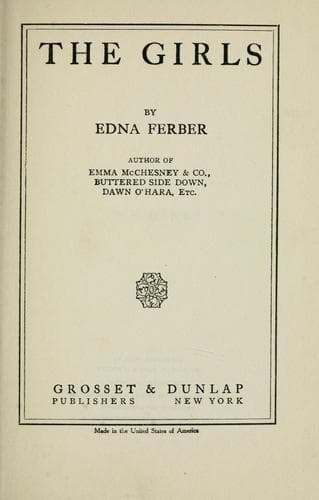
Chicago (Ill.) -- Fiction; Families -- Fiction; Women -- Fiction; World War, 1914-1918 -- Fiction
She became curiously silent for so young a girl. During those four
years she did her share with the rest of them; scraped lint, tore
and rolled bandages, made hospital garments, tied comforters, knitted
stockings and mittens, put up fruit and jellies and pickles for the
soldiers. Chicago was a construction camp. Regiments came marching
in from all the states north. Camp Douglas, south of Thirty-first
Street, was at first thick with tents, afterward with wooden barracks.
Charlotte even helped in the great Sanitary Fairs that lasted a week
or more. You would have noticed no difference between this girl and
the dozens of others who chirped about the flag-decked booths. But
there was a difference. That which had gone from her was an impalpable
something difficult to name. Only if you could have looked from her
face to that of the girl of the old photograph--that girl in the
sweeping habit, with the plume, and the rose held carelessly in one
hand--you might have known. The glow, the bloom, the radiance--gone.
People forget, gradually. After all, there was so little to remember.
Four years of war change many things, including perspective.
Occasionally some one said, "Wasn't there something about that older
Thrift girl? Charlotte, isn't it? Yes. Wasn't she mixed up with a queer
person, or something?"
"Charlotte Thrift! Why, no! There hasn't been a more self-sacrificing
worker in the whole--wait a minute. Now that you speak of it, I do
believe there was--let's see--in love with a boy her folks didn't
approve and made some kind of public scene, but just what it was----"
But Isaac and Hetty Thrift did not forget. Nor Charlotte. Sometimes,
in their treatment of her, you would have thought her still the
eighteen-year-old innocent of the photograph. When Black Crook came
to the new Crosby Opera House in 1870, scandalizing the community and
providing endless food for feminine (and masculine) gossip, Charlotte
still was sent from the room to spare her maidenly blushes, just as
though the past ten years had never been.
"I hear they wear tights, mind you, without skirts!"
"Not all the way!"
"Not an inch of skirt. Just--ah--trunks I believe they call them. A
horrid word in itself."
"Well, really, I don't know what the world's coming to. Shouldn't you
think that after the suffering and privation of this dreadful war we
would all turn to higher things?"
But Mrs. Thrift's caller shook her head so emphatically that her
long gold filigree earrings pranced. "Ah, but they do say a wave of
immorality always follows a war. The reaction it's called. That is the
word dear Dr. Swift used in his sermon last Sunday.
"Reactions are all very well and good," retorted Mrs. Thrift, tartly,
"but they don't excuse tights, I hope."
Public-domain text, read in full here on John Shaqi.
Reviews
Reviews
No reviews yet
Be the first to share your thoughts on this work.
Join the Discussion
Join the discussion
Sign in to leave a comment or review.
Sign InorCreate an account