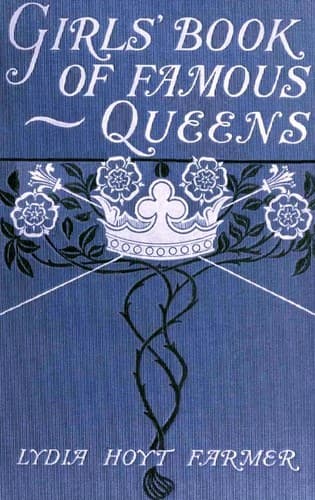
The Girls' Book of Famous QueensFarmer, Lydia Hoyt
History
The Girls' Book of Famous Queens
Farmer, Lydia Hoyt
Queens -- Biography -- Juvenile literature
In the midst of the labyrinth of conflicting testimonies and evidences,
a thread has been found which, following it to its source, leads us
to the English court of Elizabeth, as the first instigator of those
infamous lies which so many historians have claimed to be the truth,
and which, if so, must perforce stigmatize the unfortunate Mary, Queen
of Scots, as guilty beyond doubt of the terrible crimes of which she
was accused. But researches have revealed a deeper-laid scheme than
was for a long time imagined, and which, if true, brands the English
cabinet, and to some extent Elizabeth herself, as an accessory to that
scheme,—though we will give her the credit to suppose that her aid was
gained by keeping her in ignorance of the vileness of the plot,—with as
great, and even greater infamy, than has ever rested upon the probably
guiltless name of the persecuted Queen of Scots. In proof whereof, we
will give the statements which bear upon this point in their proper
place in the sketch of Mary Stuart’s life, as we proceed.
“With the exceptions of Queen Elizabeth, Catherine de’ Medici, and the
Countess of Shrewsbury, Mary had no female enemies. No female witnesses
from her household came forward to bear testimony against her when it
was out of her power to purchase secrecy, if they had been cognizant
of her guilt. None of the ladies of her court, whether of the reformed
religion or of the old faith—not even Lady Bothwell herself—lifted up
her voice to impute blame to her. Mary was attended by noble Scotch
gentlewomen in the days of her royal splendor; they clave to her
in adversity, through good report and evil report; they shared her
prisons, they waited upon her on the scaffold, and forsook not her
mangled remains till they had seen them consigned to a long-denied
tomb.”
Truly such faithful friendships throughout a life of sorrow and
continued aspersions against her character speak volumes on the side of
Mary’s innocence.
Mary Stuart was but a few days old, when James V., her royal father,
died. When Mary was nine months of age the royal ceremonial of her
coronation was solemnized. The baby queen was crowned with all the
solemnities usual upon the inauguration of the kings of Scotland. The
tiny infant was wrapped in regal robes, and borne in pompous procession
from her nursery into the church where Cardinal Beton placed the royal
crown upon her baby brow, and her little fingers were made to clasp
the sceptre of state, and she was girded with the famous sword which
had been borne by so many warlike monarchs of Scotland. And while
prelates and peers knelt before the tiny queen in solemn reverence, and
royal princes esteemed it an august honor to kiss her baby cheek, the
terrified infant, frightened by all these strange rough men around her,
wept. Poor baby queen! She began her reign in tears and ended it upon
the scaffold.
Public-domain text, read in full here on John Shaqi.
Reviews
Reviews
No reviews yet
Be the first to share your thoughts on this work.
Elsewhere in the archive
Join the Discussion
Join the discussion
Sign in to leave a comment or review.
Sign InorCreate an account