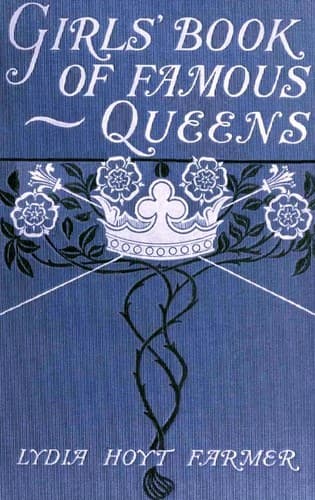
The Girls' Book of Famous QueensFarmer, Lydia Hoyt
History
The Girls' Book of Famous Queens
Farmer, Lydia Hoyt
Queens -- Biography -- Juvenile literature
Mary Stuart was rescued from the power of the infamous Bothwell, and he
was obliged to flee the country, and died in exile ten years after. But
poor abused Mary was not yet free from her enemies. The very men who
rescued her from Bothwell were leagued with England, with the ambitious
Murray at their head. Their plan was now to get rid of the queen and
get hold of the baby prince, that they might in his name get possession
of the government. And with this scheme England and Elizabeth were
well pleased, forsooth, for by bribes and threats the regent of
the baby king could be held in England’s power. As these nefarious
schemers planned, so did they execute. Queen Mary was apparently
aided by them to escape the power of Bothwell, but so cruelly was
she treated that it was but an exchange of jailors. Poor, slandered,
persecuted queen, thinking good of every one, she was betrayed on every
hand. Husband, father-in-law, half-brother, Scottish ministers, and
England’s courtiers, incited by a jealous cousin-queen, all plotted and
counter-plotted and wove the web so closely around her that there was
no escape. She was betrayed by one party, only to find herself more
cruelly betrayed by her supposed deliverers.
To whom could she turn? Elizabeth had treacherously and hypocritically
sympathized with her terrible woes. Elizabeth was a woman, and a
cousin, and a queen; would she not succor her? and so the confiding
heart of Mary, Queen of Scots, thinking no evil of those who professed
kindness, fled to England and delivered herself unwittingly into the
hands of her very worst foe. The poor fly now was entrapped, and the
wily spider prepared her final doom.
The captive Queen of Scots had been transferred from prison to prison,
each day more closely confined, each day treated with less respect
and greater cruelty. At length Mary, Queen of Scots, was brought to
trial and accused of high treason. Mary Stuart had neither advocates,
counsel, nor documents; no one was allowed to plead for her, but
notwithstanding, for two days, the ablest lawyers in England were
held in check by her wit, skill, and marvellous presence of mind.
Mary demanded to be heard by Parliament, and to be permitted to see
the queen in person. But this was denied her, and sentence of death
was passed upon her. It was at this time that Henry III., of France,
endeavored to awaken in the heart of James VI., of Scotland, some
sentiments of regard for his helpless mother. If the conduct of the
King of Scotland shocked the _son_ of _Catherine de’ Medici_, what
severer condemnation of the unnatural treatment of James VI. can be
required?
Such is Guizot’s comment upon the treatment of the young Scottish king
towards his unfortunate mother, whose pitiable misfortunes roused
many princes in Europe to espouse her cause and endeavor to effect her
freedom, which efforts in the end proved most disastrous, as they only
brought down greater accusations upon her head.
Public-domain text, read in full here on John Shaqi.
Reviews
Reviews
No reviews yet
Be the first to share your thoughts on this work.
Elsewhere in the archive
Join the Discussion
Join the discussion
Sign in to leave a comment or review.
Sign InorCreate an account