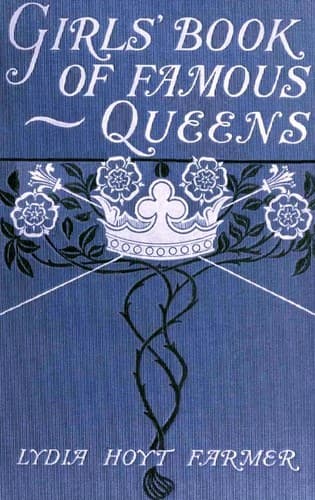
The Girls' Book of Famous QueensFarmer, Lydia Hoyt
History
The Girls' Book of Famous Queens
Farmer, Lydia Hoyt
Queens -- Biography -- Juvenile literature
“The years which followed the defeat of the Armada were rich in
events of profound national importance. They were years of splendor
and triumph. The flag of England became supreme on the seas; English
commerce penetrated to the farthest corners of the Old World, and
English colonies rooted themselves on the shores of the New. The
national intellect, strung by excitement of sixty years, took shape
in a literature which is an eternal possession to mankind, while
the incipient struggles of the two parties in the Anglican church
prepared the way for the conflicts of the coming century, and the
second act of the Reformation. The Catholic England with which the
century opened, the England of dominant church, and monasteries, and
pilgrimages, became the England of progressive intelligence; and the
question whether the nation was to pass a second time through the
farce of a reconciliation with Rome was answered once and forever by
the cannon of Sir Francis Drake. The action before Gravelines of the
30th of July, 1588, decided the largest problems ever submitted in the
history of mankind to the arbitrement of force. Beyond and beside the
immediate fate of England, it decided that Philip’s revolted provinces
should never be reannexed to the Spanish Crown. It broke the back of
Spain, sealed the fate of the Duke of Guise, and though it could not
prevent the civil war, it assured the ultimate succession of the king
of Navarre. In its remoter consequences it determined the fate of the
Reformation in Germany; for had Philip been victorious the League must
have been immediately triumphant; the power of France would have been
on the side of Spain and the Jesuits, and the thirty years’ war would
either have never been begun, or would have been brought to a swift
conclusion. It furnished James of Scotland with conclusive reasons for
remaining a Protestant, and for eschewing forever the forbidden fruit
of popery; and thus it secured his tranquil accession to the throne of
England when Elizabeth passed away. Finally, it was the sermon which
completed the conversion of the English nation, and transformed the
Catholics into Anglicans.
“While Parliament was busy with the condition of the people, the
concerns of the Church were taken in hand by the queen herself. For
Protestantism Elizabeth had never concealed her dislike and contempt.
She hated to acknowledge any fellowship in religion either with Scots,
Dutch, or Huguenots. She represented herself to foreign ambassadors
as a Catholic in everything, except in allegiance to the papacy. Even
for the Church of England, of which she was the supreme governor, she
affected no particular respect.
Public-domain text, read in full here on John Shaqi.
Reviews
Reviews
No reviews yet
Be the first to share your thoughts on this work.
Elsewhere in the archive
Join the Discussion
Join the discussion
Sign in to leave a comment or review.
Sign InorCreate an account