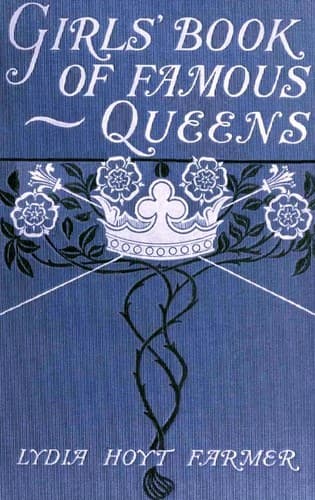
The Girls' Book of Famous QueensFarmer, Lydia Hoyt
History
The Girls' Book of Famous Queens
Farmer, Lydia Hoyt
Queens -- Biography -- Juvenile literature
“The want of wisdom shown in the persecution of the Nonconformists was
demonstrated by the event. Puritanism was a living force in England;
Catholicism was a dying superstition. Puritanism had saved Elizabeth’s
crown; Catholicism was a hot-bed of disloyalty. She found herself
compelled against her will to become the patron of heretics and rebels,
in whose objects she had no interest and in whose theology she had no
belief. She resented the necessity while she submitted to it, and her
vacillations are explained by the reluctance with which each successive
step was forced upon her on a road which she detested. It would have
been easy for a Protestant to be decided. It would have been easy for
a Catholic to be decided. To Elizabeth the speculations of so-called
divines were but as ropes of sand and sea-slime leading to the moon,
and the doctrines for which they were rending each other to pieces a
dream of fools or enthusiasts. Unfortunately her keenness of insight
was not combined with any profound concern for serious things. She saw
through the forms in which religion presented itself to the world.
She had none the more any larger or deeper conviction of her own. She
was without the intellectual emotions which give human character its
consistency and power.
“Elizabeth could rarely bring herself to sign the death-warrant of a
nobleman, yet without compunction she could order Yorkshire peasants
to be hung in scores by martial law. She was most remorseless when she
ought to have been most forbearing, and lenient when she ought to have
been stern.
“Vain as she was of her own sagacity, she never modified a course
recommended to her by Burleigh, without injury both to the realm and
to herself. The great results of her reign were the fruits of a policy
which was not her own, and which she starved and mutilated when energy
and completeness were needed.
“The greatest achievement in English history, the ‘breaking the
bonds of Rome,’ and the establishment of spiritual independence, was
completed without bloodshed under Elizabeth’s auspices, and Elizabeth
may have the glory of the work.
Public-domain text, read in full here on John Shaqi.
Reviews
Reviews
No reviews yet
Be the first to share your thoughts on this work.
Elsewhere in the archive
Join the Discussion
Join the discussion
Sign in to leave a comment or review.
Sign InorCreate an account