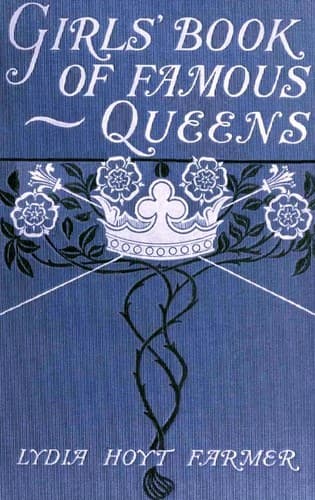
The Girls' Book of Famous QueensFarmer, Lydia Hoyt
History
The Girls' Book of Famous Queens
Farmer, Lydia Hoyt
Queens -- Biography -- Juvenile literature
Her benefactions included all classes of her subjects. She founded
large hospitals for the infirm and wounded soldiers, and opened asylums
of comfort for the widows of officers and young ladies of impoverished
families. With such a belligerent neighbor as Frederick the Great,
Maria Theresa could not feel assured of any continued period of peace,
and she therefore maintained a large army of disciplined troops, and
founded military academies at Vienna, Neustadt, and Antwerp.
The simplicity of her court life was a great contrast to the
extravagant ostentation of Elizabeth and the dissolute splendor
of Catherine II. “In the morning an old man, who could hardly be
entitled a _chamberlain_, but merely what is called on the continent
a _frotteur_, entered her sleeping-room about five or six o’clock,
opened the shutters, lighted the stove, and arranged the apartment.
She breakfasted on a cup of milk-coffee, then dressed and heard mass.
The floor of her room was so contrived that it opened by a sliding
_parquet_, and mass was celebrated in the chapel beneath. On Tuesdays
she received the ministers of the various apartments; other days
were set apart for giving audience to foreigners and strangers, who,
according to the etiquette of the imperial court, were always presented
singly, and received in the private apartments. There were stated
days on which the poorest and meanest of her subjects were admitted
indiscriminately, and they could speak to her in private if they so
desired. At other times, she attended to her letters, memorials,
despatches, signed papers, etc. During the summer, which was spent
mostly at her palaces of Schönbrunn, or at Laxenburg, she would often
walk in a shaded avenue communicating with her apartments. A box was
buckled round her waist, filled with papers and memorials, which she
carefully read as she promenaded, noting with her pencil necessary
answers or observations to each.”
She usually dined alone to economize time. After dinner she attended
to public business until six in the evening, as she dined at noon; and
until her hour of retiring her daughters joined her, when she held
a drawing-room or engaged in games with her children. Her daughters
were all expected to present themselves at evening prayers, which the
empress held before retiring, and nothing but sickness was allowed to
interfere with this family regulation.
About two years after the death of her husband she was attacked by
small-pox, which was very fatal in her family, she having lost several
children by this dread disease. Upon her recovery her marvellous beauty
was greatly marred, and being thrown from her carriage soon after and
severely wounding her face, her scarred complexion and altered features
entirely destroyed her former beauty of countenance, though her queenly
bearing and imperial grace continued to charm, and her voice lost none
of its melting sweetness.
Public-domain text, read in full here on John Shaqi.
Reviews
Reviews
No reviews yet
Be the first to share your thoughts on this work.
Elsewhere in the archive
Join the Discussion
Join the discussion
Sign in to leave a comment or review.
Sign InorCreate an account