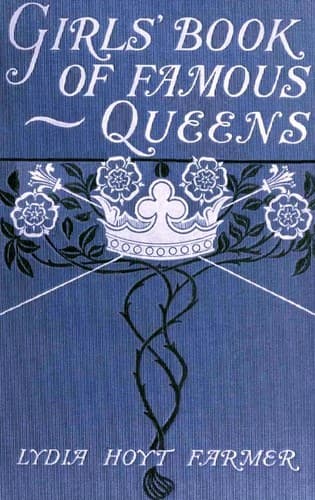
The Girls' Book of Famous QueensFarmer, Lydia Hoyt
History
The Girls' Book of Famous Queens
Farmer, Lydia Hoyt
Queens -- Biography -- Juvenile literature
But the written statements of M. de Rohan were as unsatisfactory as
his verbal ones. In half an hour he returned with a paper covered with
blottings, alterations, and erasures. Louis’ anger was aroused, and,
throwing open the folding doors, he cried out in imperious tones,—very
unusual for him,—which resounded through the _Œil de Bœuf_ and _grande
galerie_: “Arrest the Cardinal de Rohan!” The Baron de Bretuil
approached through the crowd of astonished courtiers, and, summoning
the officer on guard, he indicated the cardinal with the words, “_De
par le roi, Monseigneur_, you are arrested; at your risk, officer.”
But, before the cardinal could be removed, he had spoken three words
in German to one of his officials, and given him a slip of paper. The
horse on which the man rode post haste to the cardinal’s palace in
Paris, fell dead in the courtyard; but the red portfolio, containing
the supposed autographs of the queen’s letters, lay in ashes before
it could be sealed up in the name of justice and of the king. The
cardinal was taken to the Bastile. More arrests followed, including
that of the Comtesse de Lamotte. For nine months the trial lasted
before the Council of the Grand Chambre. The Pope protested against a
prince of the church being made accountable for his acts to any but
the highest ecclesiastical tribunal (an assembly of the cardinals at
Rome); while the _haute noblesse_ looked on the cause of the Prince
de Rohan as their own, considering the rights and privileges of their
rank intrenched upon, when a near relative of the princes of the blood
was put on his trial before the Council of the Grand Chambre. So the
cardinal was eventually acquitted, and Madame de Lamotte alone was
severely punished by flogging and branding on both shoulders.
Their Majesties were chagrined at the acquittal of M. de Rohan and
shocked at the punishment of the countess. The former was an insult
to the king, the latter to the queen; for Madame de Lamotte boasted a
descent from the House of Valois and royal blood within her veins.
Such was the affair of the Diamond Necklace, which, though apparently
trivial in itself, involved consequences of the most momentous
importance.
“Mind that miserable affair of the necklace,” said Talleyrand; “I
should be in nowise surprised if it should overturn the French
monarchy.”
Whoever were the guilty ones, Marie Antoinette was entirely innocent.
She, however, experienced all the ignominy she could have encountered
had she been involved in the deepest guilt, and the affair furnished a
fine theme for the malevolence of Bellevue and Luviciennes.
Public-domain text, read in full here on John Shaqi.
Reviews
Reviews
No reviews yet
Be the first to share your thoughts on this work.
Elsewhere in the archive
Join the Discussion
Join the discussion
Sign in to leave a comment or review.
Sign InorCreate an account