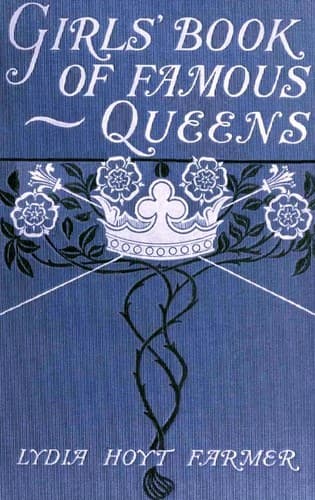
The Girls' Book of Famous QueensFarmer, Lydia Hoyt
History
The Girls' Book of Famous Queens
Farmer, Lydia Hoyt
Queens -- Biography -- Juvenile literature
“And when, at last, the long conflict was terminated, and her combined
enemies were victorious, when bereft of her throne, of her husband,
of her children, and of her liberty, she was a prisoner in the hands
of those whose unalterable object was her destruction, she bore her
accumulated miseries with a serene resignation, an intrepid fortitude,
a true heroism of soul, of which the history of the world does not
afford a brighter example.”
In the royal burying-vault of the Bourbons, at the Cathedral of
St. Denis, now rest the remains of her,—once the pride and joy of
France,—the beautiful, unfortunate Queen Marie Antoinette.
Grandeur, triumphs, sorrows, all are over.
“Ashes to ashes,
Dust to dust.”
THE EMPRESS JOSEPHINE.
A.D. 1763-1814.
“Upon my head they placed a fruitless crown.”—SHAKESPEARE.
“Farewell, a long farewell, to all my greatness.”—SHAKESPEARE.
STRANGER than fiction are the facts of history; and nowhere, among the
imaginary characters of romance and poetry, can be found a story of
a life more marvellously varied in experience, more weirdly strange
in its many thrilling scenes of unutterable misery or dazzlingly
triumphant splendor, than the history of the Empress Josephine affords.
But remarkable as were the events of her life, her character was
still more remarkable. With no early advantages of education, outside
of the fashionable accomplishments of music, drawing, and dancing;
by her self-taught acquirements, and diligent study, together with
an intuitive perception and aptitude, which enabled her mind to
grasp the gravest questions, she was in after-life a most brilliant
conversationalist; and by her comprehensive genius and marvellous
political foresight, she became the safest, wisest, and most far-seeing
of all Napoleon’s advisers and counsellors. When influenced by her
persuasive voice, prompted by a heart incapable of any motive but that
of the sternest rectitude, and most exalted and unselfish devotion,
Napoleon’s acts were always to be commended; and so highly did he prize
her counsel, that he called her his “Mentor.”
[Illustration: JOSÉPHINE.
EMPRESS OF FRANCE.]
Never did she advise him to a false step; and history has shown
that, regarding those plans and deeds of Napoleon, which results have
proved to have been unwise or grievous mistakes, the gentle voice of
Josephine had never failed to give prophetic warning.
Public-domain text, read in full here on John Shaqi.
Reviews
Reviews
No reviews yet
Be the first to share your thoughts on this work.
Elsewhere in the archive
Join the Discussion
Join the discussion
Sign in to leave a comment or review.
Sign InorCreate an account