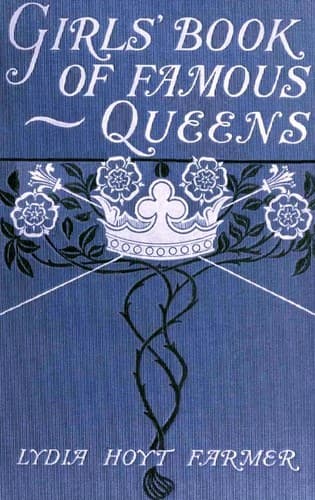
The Girls' Book of Famous QueensFarmer, Lydia Hoyt
History
The Girls' Book of Famous Queens
Farmer, Lydia Hoyt
Queens -- Biography -- Juvenile literature
As Napoleon stands forth pre-eminent amongst the famous men of history,
so does the name of Josephine shine with undying lustre among those
of the most celebrated heroines of the world. We are dazzled by
her gorgeous state and magnificence as empress. We admire her keen
intellect and exquisite tact, which never failed to suggest the most
perfect and pleasing demeanor, under every emergency, in a time of many
unsettled political opinions and tottering thrones. But we love the
gentle, unselfish _woman_, whose heart ever responded to every call
for sympathy; whose hand was ever open to bestow benefits; and whose
marvellous heroism could support her in the midst of such terrible
reverses and peculiar trials as only a woman’s heart could suffer, and
only a woman’s love could endure.
In writing the history of Josephine, we are forced to look upon the
darker side of Napoleon’s character. From the time he ceased to heed
her loving voice,—the persuasive sweetness of which, he himself
acknowledged; declaring, “that the first applause of the French people
sounded to my ear sweet as the voice of Josephine,”—from that time,
the hitherto invincible Napoleon made one false step after another,
allowing himself to be influenced by ambitious flatterers and deceived
by evil counsellors; following the _ignis fatuus_ of an overweening
ambition and thirst for power, which had taken the place of the noble
spirit of aspiring to the uplifting of his countrymen and defending the
sacred rights of the people, which had actuated his former deeds, and
covered his name with the splendid glory and well-deserved honor which
he had before achieved.
But now even his transcendent genius and glorious deeds of valor are to
be tarnished by grievous mistakes, and even crime.
The first false step taken, his downfall was as terrible and rapid as
his uprising had been sudden and glorious.
Already evil counsellors are whispering in his ear their diabolical
advice. Just here, with all our admiration for Napoleon, we are
amazed at him. That a man possessing such great genius, and with such
far-reaching intuitions, should have allowed his mind and deeds to
be influenced by the base flatterers who surrounded him, is strange
indeed. That Napoleon should not have discovered the Mephistopheles, in
Fouché, is surprising; equally amazing, that he should have become so
blinded as to turn from his truest friends and most unselfish advisers,
and have bared his breast to the poisonous fangs of the wily serpents,
who hissed around him like a nest of rattlesnakes.
That steadfastness of purpose which made Napoleon so invincible
in overcoming the most stupendous difficulties when his cause was
righteous, and which made him the wonder of the world, became the
greatest obstacle in his way when his cause was wrong and his resolves
pernicious.
Public-domain text, read in full here on John Shaqi.
Reviews
Reviews
No reviews yet
Be the first to share your thoughts on this work.
Elsewhere in the archive
Join the Discussion
Join the discussion
Sign in to leave a comment or review.
Sign InorCreate an account