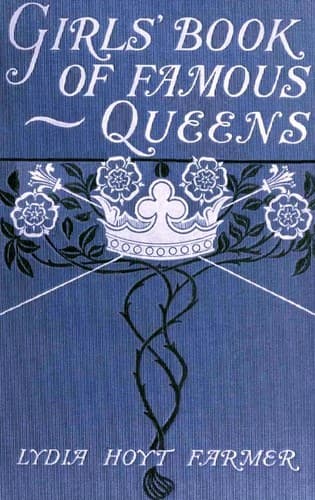
The Girls' Book of Famous QueensFarmer, Lydia Hoyt
History
The Girls' Book of Famous Queens
Farmer, Lydia Hoyt
Queens -- Biography -- Juvenile literature
“You have played the part of empress long enough; you must now become
again the wife of a general. I leave immediately; you will accompany me
to Strasburg.”
Josephine herself thus tells the story:—
“I was not at all prepared for the journey, for only a few days before
he had refused to permit me to accompany him on the campaign. At three
o’clock in the morning we were travelling speedily on the Alsace road.
My husband scarcely gave me time to throw on a night-cloak, and all my
women had left the château _en déshabillé;_ so that when morning came,
the officers who accompanied us could scarcely preserve their gravity
at seeing us in such a plight. Napoleon was extreme in every thing, and
it was never until the decisive moment came that he expressed his final
resolution. I had been so long accustomed to his singular character,
that I ceased to be astonished at the striking contrasts which it
exhibited. Our journey was full of gayety; we met sundry original
characters on the way, who furnished us abundance of amusement. We
arrived at Strasburg. My husband had a secret presentiment that he
should return victorious. He said to me, on leaving me:—
“‘Josephine watches over all that I love, and my guardian angel will
never cease to utter her prayers for the safety and success of her
husband.’
“He knew me well, that mortal whose astonishing destiny had opened to
him the road to the most splendid throne on earth. I cherished not a
thought, I formed not a wish, which was not directed to his glory. If
certain political drones have dared accuse me of levity in my conduct,
let those unjust censors remember that it was under the mask of sincere
friendship that I sought to overawe certain powerful personages. Had I
regarded them with an eye of indifference, they might have surrounded
Napoleon with perils from which no human prudence could have rescued
him. Often did I, in concert with him, carry on a correspondence. I
flattered all parties, for I love to do justice to all. When Napoleon
supposed he had grounds of complaint against any of his military
officers, I warmly pleaded their cause. He would tell me:—
“‘It depends only on me whether I will be rid of that officer. I have
only to pronounce his doom.’
“‘You are right,’ I would reply; ‘you are right; but such language does
not become your generous and noble nature.’
“‘And who can oppose me in it!’ was his quick reply.
“‘Yourself, Napoleon. ’Twould arm against your person a multitude of
brave men who are necessary to you. Certainly, a great man should
fear nothing; but he captivates all hearts when he pardons. The first
function of kings and the firmest pillar of a throne is justice.’”
Public-domain text, read in full here on John Shaqi.
Reviews
Reviews
No reviews yet
Be the first to share your thoughts on this work.
Elsewhere in the archive
Join the Discussion
Join the discussion
Sign in to leave a comment or review.
Sign InorCreate an account