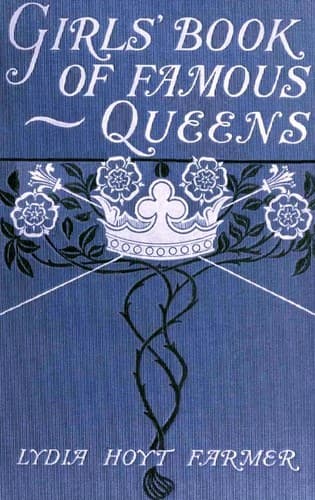
The Girls' Book of Famous QueensFarmer, Lydia Hoyt
History
The Girls' Book of Famous Queens
Farmer, Lydia Hoyt
Queens -- Biography -- Juvenile literature
Thus Josephine’s influence was always on the side of mercy and justice.
She possessed the most perfect tact, which rendered her address
irresistibly winning when partisans were to be gained for Napoleon.
She was entirely engrossed in the welfare and glory of him to whom
her heart was most unselfishly devoted and loyal. She gained for him
friends on every side; as Napoleon himself acknowledged, saying, “I
conquer empires; but Josephine wins hearts.” Bonaparte was never so
prosperous, so well-served, and so well-beloved, as during the years
when he was blessed with the counsels and aided by the adoring love of
the faithful woman, who was always his best adviser and most constant
friend.
When on one occasion Josephine warned Napoleon to be on his guard
against the advice which might be given him by his flatterers, he
replied:—
“You are right, Madame, I know how to guard myself against all their
influences. You are my _wife_ and _friend_. I want none other. Your
lot is bound to mine forever; and woe to that one of us who shall be
the first to break our oath.”
And yet in 1809, he could not guard himself against the “bees” of his
court, who hummed in his ears:—
“You must separate from the Empress Josephine. A princess of the
blood of the Cæsars will esteem it a glory to give heirs to the great
Napoleon. Then will his dynasty be established forever.”
The divorce in 1809 was brought about by the joint efforts of all the
members of the Bonaparte family, aided by some of Napoleon’s most
confidential servants, whom Josephine, either as Madame Bonaparte, or
empress, had failed to make her friends, notwithstanding her ceaseless
endeavors to harmonize all the hostile elements around her. Even as
early as the time when Napoleon was in Egypt, these intriguers first
tried to lay snares for the unsuspicious and magnanimous Josephine, and
various scandals were originated and reported to the absent Bonaparte.
Junot was made their tool either willingly or unwillingly, and the
evil whispers became louder and louder. During the first months of the
Egyptian expedition, Bonaparte’s letters to his wife were affectionate
and confiding. But the poison was soon at work, and the rumors which
Junot had repeated to Bonaparte roused his jealous anger.
Poor Josephine knew naught of these dread scandals, until the letters
received from her husband, accusing her of errors of which she was
guiltless, stabbed her to the heart. Her appeals against these
injurious aspersions were in accordance with her own noble nature. We
can only quote a few lines from her letter to Napoleon:—
Public-domain text, read in full here on John Shaqi.
Reviews
Reviews
No reviews yet
Be the first to share your thoughts on this work.
Elsewhere in the archive
Join the Discussion
Join the discussion
Sign in to leave a comment or review.
Sign InorCreate an account