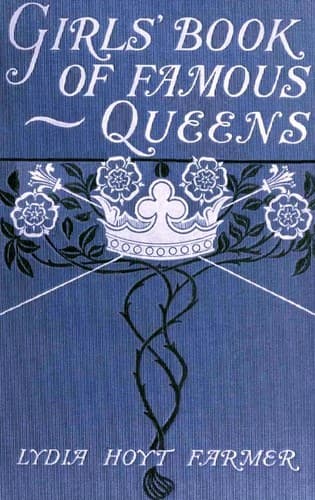
The Girls' Book of Famous QueensFarmer, Lydia Hoyt
History
The Girls' Book of Famous Queens
Farmer, Lydia Hoyt
Queens -- Biography -- Juvenile literature
This touching letter, from which we have only quoted a few lines, was
probably not received by Bonaparte until after his return to France.
And Napoleon returning to Paris found Josephine absent, for she had
started to meet him in wild impatience to welcome him; but missing him
on the road, he arrived home first and found his house deserted: but
his mother, sisters, and sisters-in-law, and in short every member of
his family, except Louis, who had attended Madame Bonaparte to Lyons,
came to him immediately, and insinuated the basest scandals about his
devoted wife, who was only absent because she had flown to meet him.
But the impression made upon him by his deserted home and the false
accusations of his family were profound and terrible; and nine years
afterwards, when the tie between himself and Josephine was broken,
he showed that he had not forgotten that time. From not finding his
wife with his family, he inferred that she felt herself unworthy
of his presence and feared to meet the man she had wronged; and he
considered her journey to Lyons a mere pretence,—so cruelly had these
evil slanderers blackened her lovely and devoted character. After the
reconciliation which followed, Bonaparte seemed for a time to have
forgotten these evil lies; but his family were intensely chagrined.
Madame Pauline Le Clerc was most vexed at the pardon which Napoleon had
granted his wife. Bonaparte’s mother was also very ill-pleased, for
she had never liked Josephine. Madame Bacchiocchi gave free vent to
her ill-humor and disdain, and Bonaparte’s brothers were at open war
with Josephine. No wonder that with such a host of evil-minded, envious
relations, poor Josephine was most terribly maligned! Bonaparte’s
brothers, desirous of obtaining entire dominion over Napoleon,
strenuously endeavored to lessen the influence which Josephine
possessed over him.
Napoleon would probably have adhered to his first idea of adopting
Eugène de Beauharnais as his successor, had it not been for his own
family, all eager for wealth and honors, all jealous of any favors
shown to Josephine or her children, all of them constantly urging a
divorce.
“Divorce her at once,” Joseph Bonaparte exclaimed; “you are not married
to her. The woman may die, and it will then be said you have poisoned
her,—that you found it to your interest to do so.”
Napoleon was staggered at these monstrous suggestions. His countenance
became of a deathlike paleness as these terrible insinuations fell upon
his ear. After a moment or two of silence he murmured:—
“You have forced on me an idea which would never have occurred to me,
and with it the possibility of a divorce.”
Thus was the evil working, which should end in the cruel blow to
Josephine and the downfall of Napoleon. Years elapsed before Napoleon
was induced to act upon these suggestions, but the tempters had begun
their diabolical work.
Public-domain text, read in full here on John Shaqi.
Reviews
Reviews
No reviews yet
Be the first to share your thoughts on this work.
Elsewhere in the archive
Join the Discussion
Join the discussion
Sign in to leave a comment or review.
Sign InorCreate an account