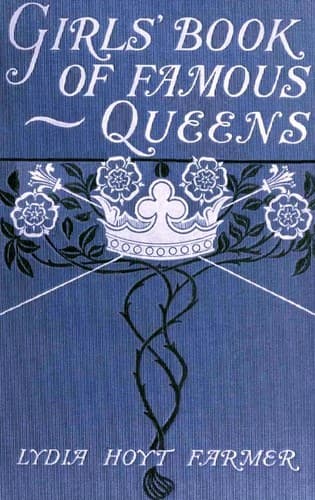
The Girls' Book of Famous QueensFarmer, Lydia Hoyt
History
The Girls' Book of Famous Queens
Farmer, Lydia Hoyt
Queens -- Biography -- Juvenile literature
As Napoleon’s marriage with Josephine had at first been only a civil
ceremony,—the religious service having been only performed at the time
of the coronation, when religious worship had been reinstated in
France,—Joseph Bonaparte basely insinuated that the tie between them
was not binding; and as by some mistake the necessary witnesses had
not been present at the after religious ceremony, and a signature was
said to be wanting to make the certificate of marriage complete, these
circumstances were afterwards laid stress upon, in declaring that their
marriage had been irregular and could therefore be annulled. And either
by evil intent or inadvertence a notice of the religious ceremony did
not appear in the _Moniteur_, which described the coronation at great
length. Thus was the web spun by the political spiders closer and
closer around their poor innocent victim, Josephine, and she became the
subject of their vilest plots.
Napoleon’s attachment to Josephine withstood all suggestions during the
period preceding the Empire, and Josephine herself afterwards declared,
“that unless urged by others, he would not of himself have thought of a
separation.”
But at length, instigated by Fouché and his own relations and other
evil advisers, Napoleon determined to divorce Josephine. This same wily
Fouché hinted to Josephine her coming doom, and advised that she should
first broach the subject to the emperor; but Josephine indignantly
refused.
“It was on Sunday, on returning from church, that Fouché, the minister
of the police, leading Josephine to the embrasure of a window in the
château at Fontainebleau, gave her the first shock on the subject of
the divorce, which did not take place until two years after.”
The family of Bonaparte became more openly hostile to Josephine. One of
the writers of her memoirs says:—
“Joseph could not endure her, while on the other hand, his wife
rendered her the fullest justice. As to Madame Murat, she was by no
means careful to conceal her thoughts, and on many occasions sought
to humiliate Napoleon’s wife. Madame Bacchiocchi, Napoleon’s eldest
sister, considered Josephine as the earliest instrument of her
brother’s greatness. ‘But,’ said she, ‘the moment her power becomes
too great it must be broken down, and that without pity.’ She was one
of the first to advise that unrighteous separation, which worked so
much prejudice to the emperor and his whole family. Madame Letitia,
Napoleon’s mother, occasioned real trouble and vexation to her
daughter-in-law. Their feelings were in perpetual opposition. The one
was remarkable for her acts of benevolence; the other for her extreme
parsimony. The mother loudly disapproved of the luxury which reigned at
her son’s court, and charged the fault to Josephine.”
Public-domain text, read in full here on John Shaqi.
Reviews
Reviews
No reviews yet
Be the first to share your thoughts on this work.
Elsewhere in the archive
Join the Discussion
Join the discussion
Sign in to leave a comment or review.
Sign InorCreate an account