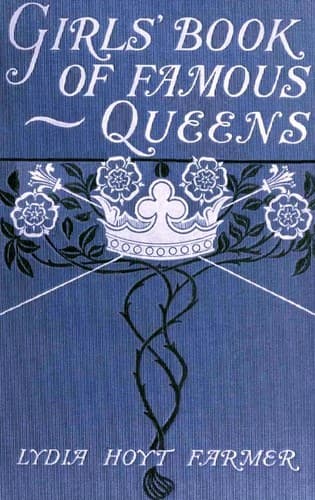
The Girls' Book of Famous QueensFarmer, Lydia Hoyt
History
The Girls' Book of Famous Queens
Farmer, Lydia Hoyt
Queens -- Biography -- Juvenile literature
The Duchesse D’Abrantes gives this account of a visit to Josephine
just previous to the public announcement of the divorce: “I had an
interview with the empress at Malmaison. I had sent her a plant from
the Pyrenees, and she wished me to see it in the hot-house. But in
vain she attempted to employ herself with those objects which pleased
her the most; her eyes were frequently suffused with tears; she was
pale, and her whole manner marked indisposition. ‘It is very cold!’
she said, drawing her shawl about her; but, alas! it was the chill of
grief creeping about her heart, like the cold hand of death. ‘Madame
Junot,’ she said, ‘remember what I say to you this day here, in this
hot-house,—this place which is now a paradise, but which may soon
become a desert to me,—remember that this separation will be my death,
and it is they who will have killed me! I shall be driven in disgrace
from him who has given me a crown! Yet God is my witness that I love
him more than my life, and much more than that throne, that crown,
which he has given me.’ The empress may have appeared more beautiful,
but never more attractive than at that moment. If Napoleon had seen
her then, surely he could never have divorced her.” Lanfrey thus
comments upon this event: “On the evening of Nov. 30, the prefect of
the palace was on duty in an apartment adjoining the drawing-room
where the emperor and Josephine were sitting, when he heard piercing
cries, and with amazement recognized the voice of the empress. A few
moments afterwards the door opened, and Napoleon having called him
in, he beheld the empress suffering from a violent nervous attack,
and uttering exclamations of distress and despair. He then helped
Napoleon to carry her into her own apartment. In fact, the much-dreaded
explosion had taken place. The emperor had at first determined to
await the arrival of the Prince Eugène in Paris, in order that the
presence and consolations of the son whom Josephine so tenderly loved
might soften the bitterness of his intended communication. When he
announced the terrible news to her who alone was ignorant of it,—to the
woman who, by having brought him among her wedding presents the chief
command of the army in Italy, had so eminently contributed towards his
exalted fortune,—eight days had already elapsed since he had desired
Champagny to ask for him the hand of the Emperor Alexander’s sister. It
was Russia, his ally, not Austria, whom he thought it better to address
first.
Public-domain text, read in full here on John Shaqi.
Reviews
Reviews
No reviews yet
Be the first to share your thoughts on this work.
Elsewhere in the archive
Join the Discussion
Join the discussion
Sign in to leave a comment or review.
Sign InorCreate an account