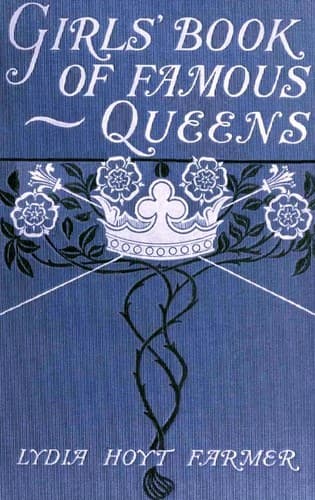
The Girls' Book of Famous QueensFarmer, Lydia Hoyt
History
The Girls' Book of Famous Queens
Farmer, Lydia Hoyt
Queens -- Biography -- Juvenile literature
So frequent were the revolts among his English subjects, that at
length William thought best to send Matilda and their children back to
Normandy, where she resumed the regency. She did not reside in England
after this time.
Robert, the eldest son of William and Matilda, now occasioned his
parents much trouble. At last the quarrel between father and son
resulted in open war.
Matilda, whose excessive partiality for her eldest son much offended
her husband, supplied the rebellious Robert with large sums of money;
and when means failed her, she even parted with her plate and jewels to
aid her favorite child. William was in England when the news reached
him of the rebellion of Robert and the part Matilda was taking in the
matter, and he immediately set out for Normandy. Upon arriving there,
and learning the truth of these rumors, he met his wife with bitter
reproaches. There was stern grandeur, not unmixed with tender pity and
love, in the harsh words which he addressed to Matilda, which were not
entirely unmerited; and there was also a sublime depth of mother’s love
in her reply. Fixing his eyes upon the queen, the Conqueror exclaimed
with trembling voice:—
“The brightest jewel of my bosom hath pierced my heart with the deadly
dart of treachery. Behold, my wife!—the treasure of my soul—to whom
I have confided my wealth, my crown, my greatness, my all. She hath
supported my rebel son in perfidy, and aided him to raise his sword
against his own father.”
“My lord!” replied Matilda, “far be from me to do you wrong. But when
you spurn our firstborn and retain from him his rights, you drive him
to wretchedness and distraction. Be not surprised if I feel a mother’s
tenderness for her child. Nay, so much do I love him, that for his dear
sake I would dare any danger, do any deed. Ask me not to enjoy the pomp
of royalty while he is pining in want and misery; as a loving husband,
you have no right to impose such insensibility on a mother.”
Robert and his father met in battle at Archembraye; and in the contest
Robert unhorsed his father, and, unconscious as to whom he had
defeated, was about to pierce him with his sword, when he recognized
his foe, and fell at his feet begging forgiveness, horrified at the
thought of how nearly he had committed the awful crime of parricide. A
reconciliation took place, and Robert accompanied William to England.
Public-domain text, read in full here on John Shaqi.
Reviews
Reviews
No reviews yet
Be the first to share your thoughts on this work.
Elsewhere in the archive
Join the Discussion
Join the discussion
Sign in to leave a comment or review.
Sign InorCreate an account