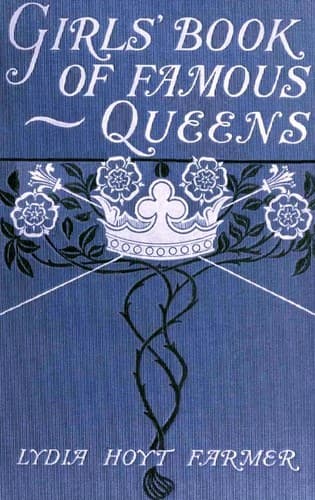
The Girls' Book of Famous QueensFarmer, Lydia Hoyt
History
The Girls' Book of Famous Queens
Farmer, Lydia Hoyt
Queens -- Biography -- Juvenile literature
In 1529 Queen Catharine was summoned into court to meet her public
sentence. When the crier called, “Henry, king of England, come into
court,” he answered from his royal seat of state, in loud tones,
“Here,” and thereupon proceeded to make known his many troubles
regarding his tender conscience and religious scruples, which so sore
distressed his royal mind; ending in a panegyric upon the many virtues
of his beloved wife, Catharine, from whom none other cause than his
afflicted conscience would ever have forced him to consent to part.
After this arch-traitor to all domestic faithfulness had thus relieved
his burdened heart, the crier summoned, “Catharine, queen of England.”
Taking no notice of the surrounding legates, the sorrowful queen rose
with graceful dignity, and, followed by her ladies, she went round
about the court, even to where the king sat, and kneeling at his feet
she thus pathetically addressed him, with quaint foreign accent and
persuasive voice: “Sir, I beseech you, for the love of God, let me have
some justice. Take some pity on me, a poor stranger in your dominions;
I have no counsellor in this land, and, as you are the head of justice
in your realm, I flee to you. Alas! I take God to witness that for
these twenty years I have been to you a true, humble, and obedient
wife. And if our children have died, it has not been for the want of a
mother’s love or care. The king, your father, was accounted a second
Solomon for wisdom, and my father, Ferdinand, was deemed one of the
wisest kings of Spain; and they had counsellors as wise as those of
these days, and they all, verily, thought our marriage good and lawful.
Therefore I marvel greatly at the inventions now brought against me. If
you have found any dishonor in my conduct, then am I content to depart;
but if none there be, then I beseech you thus humbly to let me remain
in my proper state.”
The queen then rose up in tears, and making a low obeisance to the
king, she walked out of court; nor would she return, even though the
crier again called her name. Nor would she ever more attend these evil
councils, but waited in patient silence the coming of her dread doom.
Nor did she display any enmity to the boastful Anne Boleyn, who did
most indecently declare her growing power over the fickle fancies of
the cruel king. Save only on one occasion, did Queen Catharine give to
her intimation that she was aware of her ambitious views. The queen was
once playing cards with Anne Boleyn, when she thus addressed her: “My
lady Anne, you have the good hap ever to stop at a king; but you are
like others, you will have all or none.”
Public-domain text, read in full here on John Shaqi.
Reviews
Reviews
No reviews yet
Be the first to share your thoughts on this work.
Elsewhere in the archive
Join the Discussion
Join the discussion
Sign in to leave a comment or review.
Sign InorCreate an account