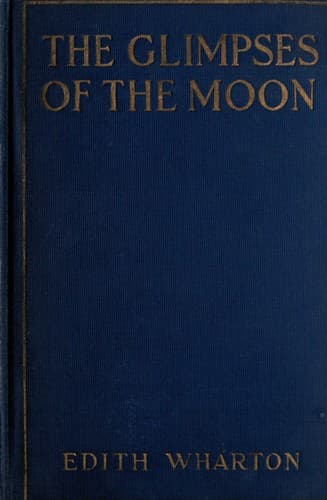
Americans -- Europe -- Fiction; Europe -- Fiction; Love stories; Marriage -- Fiction; Married people -- Fiction; Socialites -- Fiction
IT was a trifling enough sign, but it had remained in Susy’s mind: that
first morning in Venice Nick had gone out without first coming in to see
her. She had stayed in bed late, chatting with Clarissa, and expecting
to see the door open and her husband appear; and when the child left,
and she had jumped up and looked into Nick’s room, she found it empty,
and a line on his dressing table informed her that he had gone out to
send a telegram.
It was lover-like, and even boyish, of him to think it necessary to
explain his absence; but why had he not simply come in and told her! She
instinctively connected the little fact with the shade of preoccupation
she had noticed on his face the night before, when she had gone to his
room and found him absorbed in letter; and while she dressed she had
continued to wonder what was in the letter, and whether the telegram he
had hurried out to send was an answer to it.
She had never found out. When he reappeared, handsome and happy as the
morning, he proffered no explanation; and it was part of her life-long
policy not to put uncalled-for questions. It was not only that her
jealous regard for her own freedom was matched by an equal respect for
that of others; she had steered too long among the social reefs and
shoals not to know how narrow is the passage that leads to peace of
mind, and she was determined to keep her little craft in mid-channel.
But the incident had lodged itself in her memory, acquiring a sort of
symbolic significance, as of a turning-point in her relations with her
husband. Not that these were less happy, but that she now beheld them,
as she had always formerly beheld such joys, as an unstable islet in
a sea of storms. Her present bliss was as complete as ever, but it was
ringed by the perpetual menace of all she knew she was hiding from Nick,
and of all she suspected him of hiding from her....
She was thinking of these things one afternoon about three weeks after
their arrival in Venice. It was near sunset, and she sat alone on the
balcony, watching the cross-lights on the water weave their pattern
above the flushed reflection of old palace-basements. She was
almost always alone at that hour. Nick had taken to writing in the
afternoons--he had been as good as his word, and so, apparently, had the
Muse and it was his habit to join his wife only at sunset, for a late
row on the lagoon. She had taken Clarissa, as usual, to the Giardino
Pubblico, where that obliging child had politely but indifferently
“played”--Clarissa joined in the diversions of her age as if conforming
to an obsolete tradition--and had brought her back for a music lesson,
echoes of which now drifted down from a distant window.
Public-domain text, read in full here on John Shaqi.
Reviews
Reviews
No reviews yet
Be the first to share your thoughts on this work.
Join the Discussion
Join the discussion
Sign in to leave a comment or review.
Sign InorCreate an account