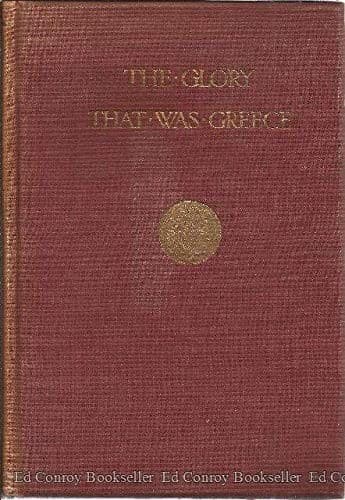
The Glory That Was Greece: a survey of Hellenic culture and civilisationStobart, J. C. (John Clarke)
History
The Glory That Was Greece: a survey of Hellenic culture and civilisation
Stobart, J. C. (John Clarke)
Art, Greek; Greece -- Civilization -- To 146 B.C.
But every national virtue has its characteristic defect which will come
to the surface as soon as the stimulus of national self-respect is
removed. A strong conquering breed is apt to
[Illustration: The Laocoön Group]
become cruel and vicious when it loses the power to conquer. A
sensitive, artistic people is prone to sensuality and weakness in its
latter days. An industrous commercial race degenerates into sordid
greed. That is why a loss of national pride is such a serious loss in
history. A characteristic virtue of the Greeks was, as we have seen,
their supple facility of intellect, their
[Illustration: PLATE XCI. THE FARNESE BULL
_Brogi_]
adaptability to environment. This made them, in the days of their
decline, sink readily to the position of flatterers and parasites. We
find this character attached to the “Hungry Greekling” of Juvenal’s
days. In history we meet him as the hanger-on of aristocracy or the
crafty tool of emperors. The Romans started as a virile race of
warriors, and ended as brutal gluttons with a craving for
sensationalism, which the Greeks were only too ready to supply. Hence we
get Græco-Roman art in the worst sense of the term, wretched stuff made
by sneaks to satisfy the taste of bullies. Most of the sculpture
galleries of Europe can supply examples. The Vatican and the Naples
Museum are full of them. In the nineteenth century, when the taste of
Europe had sunk to its lowest depth of artificiality, work of this kind
appealed very strongly to critics. It is only fair to them to say that
they had not much opportunity of knowing better, since genuine Greek
work of the best periods was mostly lying below the surface unexcavated.
Out of this mass of inferior material critics picked one or two examples
for admiration. Even great men like Lessing and Winckelmann based
excellent maxims of criticism on these rotten foundations. The
“Laocoön,” a sensational work by Rhodian sculptors of the first century
B.C., was taken by Lessing as the text of his great discourse on the
proper functions of the arts. We, on the other hand, can see that this
tangled triangle of writhing forms expressing violent emotion of pain
and terror has a theatrical and sensational character abhorrent to the
very spirit of Greek moderation. Exactly the same is true of the two
Farnese masterpieces, the Bull[116] and the Hercules. Such facts as
these give one cause to ponder on the mutability of taste and the
fallibility of artistic criticism. Restlessness, the symptom of nerves
overwrought, is a feature of decadence, which we can observe in the late
Greek vase-paintings. The spaces are covered with trivial ornament, the
drawing is slack, the sole aim is prettiness. The vigour of the
composition is frittered away upon trivial details. In short, the name
of the disease from which Greek art was to perish is Vulgarity. Idealism
without romanticism was the secret of Greek art at its best. When we
find romance without ideals we have reached the nadir.
Public-domain text, read in full here on John Shaqi.
Reviews
Reviews
No reviews yet
Be the first to share your thoughts on this work.
Elsewhere in the archive
Join the Discussion
Join the discussion
Sign in to leave a comment or review.
Sign InorCreate an account