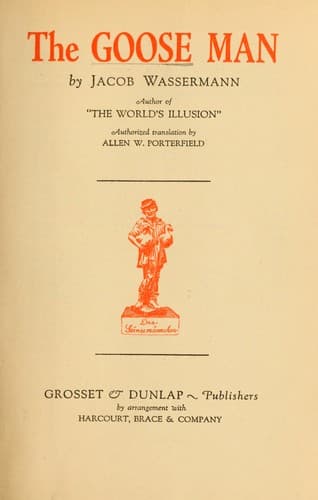
Composers -- Fiction; German fiction -- Translations into English; Germany -- Fiction
The Baron’s change of religious views caused the greatest excitement
throughout the entire country. The liberal newspapers published
fulminatory articles; flaming protests were made in the clubs against
the surreptitious propaganda of Rome. The ultramontane party leaders
rejoiced and made capital out of the marvellous return of such a sceptic
to the bosom of the Church which alone can save the souls of men: they
used the case as a bait for fresh recruits and as a means to fill the
old regulars with greater fire and enthusiasm. Through the homes blew a
breath of a tyrannical priesthood and spiritual gagging.
Eberhard adapted himself to his changed condition quickly and with but
little apparent effort: the chaos of opinions left him virtually
unmoved. To become the master of so much and so many people, and to do
it so suddenly, necessitated dignity, a clear eye, and a firm hand. His
being was in no danger from an excess of zeal or up-start conceit,
suffer though he might from too great seriousness and his preference for
a place in the shadow. Strangely enough, the abundance of his
responsibilities made him more cheerful. And where he was unable to take
his part in the world of outward unrest, Sylvia’s influence interceded
and made it possible for him to do what was expected of him.
In May he accompanied her and her mother to Erfft. There they took long
walks together every day, and talked a great deal about Eleanore. At
first he spoke with noticeable reserve. But when he felt that he had
gained the confidence of his auditor, and she his, he spoke quite
candidly, so candidly in truth that Sylvia came to look upon his action
as one of inner liberation.
When he told of Eleanore’s marriage to Daniel Nothafft, Sylvia
interrupted him, and asked a number of questions concerning Daniel. “Oh,
yes, he was our guest once; he is the Kapellmeister,” she said. And then
she told him all about Daniel’s visit at Erfft, and did it with a smile
in which there were both indulgence and re-awakened astonishment.
Her smile made the same appeal to Eberhard that Eleanore’s had. And yet,
when he was in Sylvia’s company, he seemed to recognise more distinctly
than ever what had drawn him with such irresistible power to Eleanore,
possibly because Sylvia was of a less ardent and forceful nature. He
could not exactly express it in words; he merely felt that it was the
unknown realm of tones, the unknown melting of melodies, the ringing
order of the music transformed into soul.
At the beginning of June, Sylvia went back to Nuremberg with Eberhard
and her parents. A few days later the betrothal took place in the
baronial residence.
VII
Herr Carovius had been paid. The consortium of silent backers had been
dissolved.
Public-domain text, read in full here on John Shaqi.
Reviews
Reviews
No reviews yet
Be the first to share your thoughts on this work.
Elsewhere in the archive
Join the Discussion
Join the discussion
Sign in to leave a comment or review.
Sign InorCreate an account