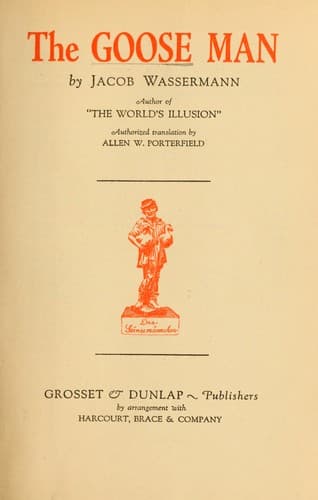
Composers -- Fiction; German fiction -- Translations into English; Germany -- Fiction
“The work, Daniel Nothafft, the work,” wrote this second Rahel in
another letter, “the rape of Prometheus, when are you going to lay it at
the feet of impoverished humanity? The age is like wine that tastes of
the earth; your work must be the filter. The age is like an epileptic
body convulsed with agonies; your work must be the healing hand that
one lays on the diseased brow. When will you finally give, O
parsimonious mortal? when ripen, tree? when flood the valley, stream?”
But the tree was in no hurry to cast off the ripened fruit; the stream
found that the way to the sea was long and tortuous; it had to break
through mountains and wash away the rocks. Oh, those nights of torment
when an existing form crashed and fell to the earth in pieces! Oh, those
hundreds of laborious nights in which there was no sleep, nothing but
the excited raging of many voices! Those grey mornings on which the sun
shone on tattered leaves and a distorted face, a face full of suffering
that was always old and yet new! And those moonlight nights, when some
one moved along singing, not as one sings with joy, but as the heretics
who sat on the martyr benches of the Inquisition! Then there were the
rainy nights, the stormy nights, the nights when it snowed, and when he
chased after the phantom of a melody that was already half his own, and
half an incorporeal thing wandering around in boundless space under the
stars.
Each landscape became a pale vision: bush and grass and flower, like
spun yarn seen in a fever, the people who passed by, and the clouds
fibrillated above the forests were of one and the same constituency.
Nothing was tangible; the palate lost its sense of taste, the finger its
sense of touch. Bad weather was welcome; it subdued the noises, made men
quieter. Cursed be the mill that clappers, the carpenter who drives the
nails, the teamster who calls to his jaded pair, the laughter of
children, the croaking of frogs, the twittering of birds! An insensate
man looks down upon the scene, one who is deaf and dumb, one who would
snatch all clothing and decorations from the world, to the end that
neither colour nor splendour of any description may divert his eye, one
who mounts to heaven at night to steal the eternal fire, and who burrows
in the graves of the dead by day—an outcast.
In the beginning of spring, he started on the third movement, an andante
with variations. It expressed the gruesome peace that hovered over
Eleanore’s slumbering face one night before her death. The springs
within him were all suddenly dried up; he could not tell why his hand
was paralysed, his fancy immobile.
Public-domain text, read in full here on John Shaqi.
Reviews
Reviews
No reviews yet
Be the first to share your thoughts on this work.
Elsewhere in the archive
Join the Discussion
Join the discussion
Sign in to leave a comment or review.
Sign InorCreate an account