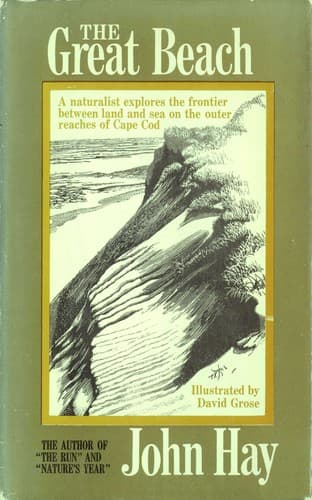
Cape Cod (Mass.) -- Description and travel; Natural history -- Massachusetts -- Cape Cod
From 20,000 feet up, Cape Cod looks very much as it does on topographic
maps, its heights and depths eliminated, a flat level land of sandy
margins and wide green patches emerging out of the sea. In fact,
with all its glacial lakes and ponds--between three and four hundred
in number--its streams, marshes, bays, coves, and inlets, it might
seem to consist as much of water as of earth. On a clear day at a
lower altitude, skirting or passing over the shore line, you can see
configurations of sand, the slopes and curves of the shoals, the white
swirls and scallops under water made by currents and tides. The sea
sparkles, and explodes with light where the sun strikes it directly.
The spilling waves make small white accents along the shore. Tilting
in the heights, you get a sense of mobility on a great scale. All the
close, pressing impressions of locality are replaced by the roving of
the waters, the islands of the mapped world floating there, the height
and weight and emptiness of the sky.
However far their ageless impunity may reach, the world’s argument
is that Cape Cod and its Outer Beach are under human guidance,
surveillance, and authority. Those who come there bring their own
distance with them. If we are not yet world-minded, we are world
engaged. This is not a cast-off, self-sufficient countryside any
longer, and it has lost most, if not all, of the look of a bleak,
cut-over, and yet habitable seaside land that it had in the nineteenth
century, when the inhabitants still depended on the sea for their
livelihood, when you could smell the fish and hear the sermons on its
shores.
An estimated 300,000 people visit the Cape during the summer, or even
more, depending on the tides of economy and change, but after they
have gone there are 80,000 year-round residents left, with more to be
expected in the future. So, in spite of its stretches of comparatively
uninhabited sands and its wooded areas, the Cape is caught up in the
human scheme of things, and we can hardly avoid looking at it with
modern eyes, for good or ill. We own it, and that is the way we are
inclined to see it, not for its sake but ours. All roads lead to a Cape
Cod beach, or to Los Angeles, or Yellowstone. Every place is invested
with human importunity, and the crowd will tell you where you are.
Drive down any of the great concrete highways of the nation in the
heat of the summer along with thousands, or millions, through a
landscape whose scale affected our ideas of size to begin with, and you
realize that Americans have an affinity for distance--which is also
a capacity for laying the distance bare. We have learned this from
our continent. We have learned how to exploit, turning the native,
active riches of a great land into passive objects of our will, and we
have taken a greatness from it for our own. While we have transformed
our surroundings, we ourselves have been transformed without being
altogether aware of the debt we owe.
Public-domain text, read in full here on John Shaqi.
Reviews
Reviews
No reviews yet
Be the first to share your thoughts on this work.
Join the Discussion
Join the discussion
Sign in to leave a comment or review.
Sign InorCreate an account