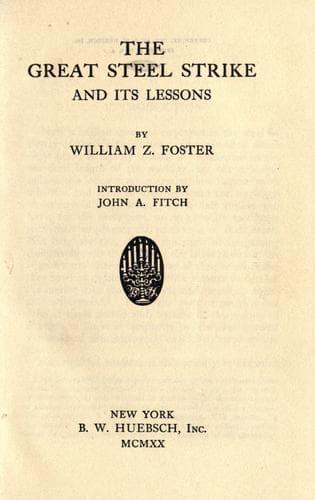
The Great Steel Strike and its LessonsFoster, William Z.
History
The Great Steel Strike and its Lessons
Foster, William Z.
Steel Strike, U.S., 1919-1920; United States Steel Corporation
In preceding chapters I have said much about the injustices visited upon
the steel workers by the steel companies and their minions; the mayors,
burgesses, police magistrates, gunmen, State Police, Senate Committees,
etc. But let there be no mistake. I do not blame the failure of the
strike upon these factors. I put the responsibility upon the shoulders
of Organized Labor. Had it but stirred a little the steel workers would
have won their battle, despite all the Steel Trust could do to prevent
it.
By this I mean no harsh criticism. On the contrary, I am the first to
assert that the effort put forth in the steel campaign was wonderful,
far surpassing anything ever done in the industry before, and marking a
tremendous advance in trade-union tactics. Yet it was not enough, and it
represented only a fraction of the power the unions should and could
have thrown into the fight. The organization of the steel industry
should have been a special order of business for the whole labor
movement. But unfortunately it was not. The big men of Labor could not
be sufficiently awakened to its supreme importance to induce them to sit
determinedly into the National Committee meetings and to give the
movement the abundant moral and financial backing so essential to its
success. Official pessimism, bred of thirty years of trade-union failure
in the steel industry, hung like a mill-stone about the neck of the
movement in all its stages.
At the very outset this pessimism and lack of faith dealt the movement a
fatal blow. When the unions failed to follow the original plan of the
campaign (outlined in Chapter III) to throw a large crew of organizers
into the field at the beginning and thus force a settlement with the
steel companies during war time, as they could easily have done, they
made a monumental blunder, one for which Organized Labor will pay
dearly. Notwithstanding all their best efforts in the long, bitter
organizing campaign and the great strike, the organizers could not
overcome its effects. It was a lost opportunity that unquestionably cost
the unionization of the steel industry.
Public-domain text, read in full here on John Shaqi.
Reviews
Reviews
No reviews yet
Be the first to share your thoughts on this work.
Elsewhere in the archive
Join the Discussion
Join the discussion
Sign in to leave a comment or review.
Sign InorCreate an account