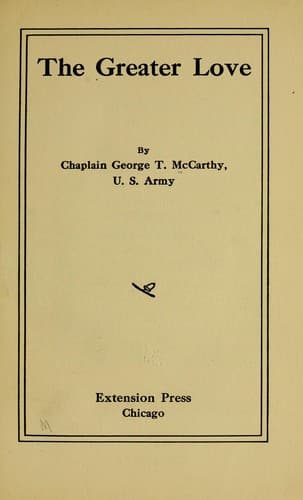
World War, 1914-1918 -- Personal narratives, American
If there was distraction for our troops at all, it was perhaps at the
collection. Not that the giving of their centimes or francs was
distracting, rather was it the manner of Collection a la Francais. It is
taken up by the most handsome young ladies of the congregation--our
American Tag Days were perhaps suggested by it. Marching before the
Mademoiselles and striking sharply on the pavement with his staff,
solemnly comes the aged Master of Ceremonies. No prayers so absorbing
nor slumber so profound, but the anvil clang of his staff will arouse. A
hand embroidered silken bag is handed to you in the most charming
manner. What Buddie could resist such appeal?
It was during our days in this area I was appointed Division Burial
Officer--undertaker for the entire Division. The order, duly bulletined,
at first shocked me--what qualifications had I for a work so unusual?
However, I promptly accepted it for reasons two-fold: First, it is not
the part of a soldier to question the wisdom of orders, and, second,
anything and everything done for Old Glory is an honor. Jealously I
raided the archives of the Personnel Department at Headquarters, my
"towney" Captain Brown of Grand Haven, Michigan, helping me, and studied
all Orders and Bulletins bearing on the subject, "how to identify,
register and bury the dead." The responsibility was indeed weighty and
the work vast--to organize, equip and drill burial details; to bury our
own dead, all enemy dead and horses; to assemble personal effects and
identification tags found on the persons of the deceased; to bathe,
clothe and prepare bodies for burial; to furnish coffins, gravediggers,
firing squads and buglers. Daily report of all burials was to be made to
the Graves' Registration Service at Chaumont. It can easily be realized
how important this work became as we grew nearer the fighting front. On
battlefields, drenched with deadly gas, under fire and amid conditions
and scenes most revolting and appalling, the burial parties worked,
usually in gas masks for protection against odors and fumes.
Public-domain text, read in full here on John Shaqi.
Reviews
Reviews
No reviews yet
Be the first to share your thoughts on this work.
Join the Discussion
Join the discussion
Sign in to leave a comment or review.
Sign InorCreate an account