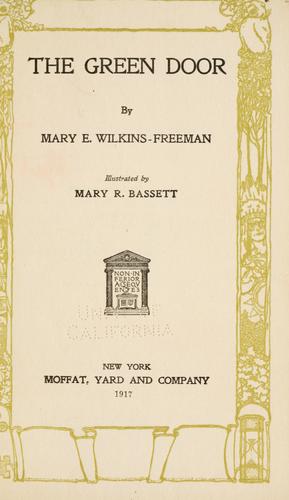
Children -- Conduct of life -- Juvenile fiction; Girls -- Juvenile fiction; Time travel -- Juvenile fiction
Letitia ate the porridge, every grain of it. After breakfast the
serious work of the day began. Letitia had never known anything like
it. She felt like a baby who had just come into a new world. She was
ignorant of everything that these strange relatives knew. It made no
difference that she knew some things which they did not, some
advanced things. She could, for instance, crochet, if she could not
knit. She could repeat the multiplication-table, if she did not know
the doctrine of predestination; she had also all the States of the
Union by heart. But advanced knowledge is not of as much value in the
past as past knowledge in the future. She could not crochet, because
there was no crochet needles; there were no States of the Union; and
it seemed doubtful if there was a multiplication-table, there was so
little to multiply.
So Letitia had set herself to acquiring the wisdom of her ancestors.
She learned to card, and hetchel, and spin and weave. She
learned to dye cloth, and make coarse garments, even for her
great-great-great-grandfather, Captain John Hopkins. She knitted
yarn stockings, she scoured brass and pewter, and, more than all,
she learned the entire catechism. Letitia had never really known
what work was. From long before dawn until long after dark, she
toiled. She was not allowed to spend one idle moment. She had no
chance to steal out and search for the little green door, even had
she not been so afraid of wild beasts and Indians.
She never went out of the house except on the Sabbath day. Then, in
fair or foul weather, they all went to meeting, ten miles through the
dense forest. Captain John Hopkins strode ahead, his gun over his
shoulder. Goodwife Hopkins rode the gray horse, and the girls rode by
turns, two at a time, clinging to the pillion at her back. Letitia
was never allowed to wear her own pretty plain dress, with the velvet
collar, even to meeting.
"It would create a scandal in the sanctuary," said Goodwife Hopkins.
So Letitia went always in the queer little coarse and scanty gown,
which seemed to her more like a bag than anything else; and for
outside wraps she had--of all things--a homespun blanket pinned over
her head. Her great-great-grandmother and her great-great-aunts were
all fitted out in a similar fashion. Goodwife Hopkins, however, had a
great wadded hood and a fine red cloak.
There was never any fire in the meeting-house, and the services
lasted all day, with a short recess at noon, during which they went
into a neighboring house, sat round the fire, warmed their half
frozen feet, and ate cold corn-cakes and pan-cakes for luncheon.
There were no pews in the meeting-house, nothing but hard benches
without backs. If Letitia fidgetted, or fell asleep, the tithing-men
rapped her. Letitia would never have been allowed to stay away from
meeting, had she begged to do so, but she never did. She was afraid
to stay alone in the house because of Indians.
Public-domain text, read in full here on John Shaqi.
Reviews
Reviews
No reviews yet
Be the first to share your thoughts on this work.
Join the Discussion
Join the discussion
Sign in to leave a comment or review.
Sign InorCreate an account