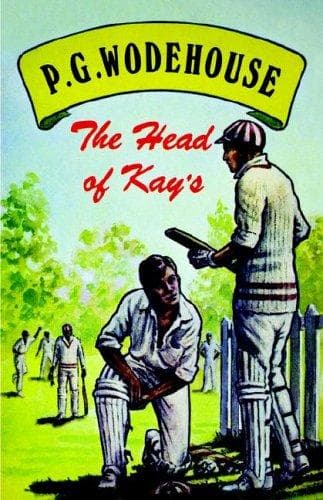
The Head of Kay'sWodehouse, P. G. (Pelham Grenville)
General
The Head of Kay's
Wodehouse, P. G. (Pelham Grenville)
Schools -- Fiction
Walton proceeded to separate the combatants. After which he rebuked
Billy Silver with a swagger-stick. Wren's share in the business he
overlooked. He was by way of being a patron of Wren's, and he disliked
Billy Silver, partly for his own sake and partly because he hated his
brother, with whom he had come into contact once or twice during his
career at Eckleton, always with unsatisfactory results.
So Walton dropped on to Billy Silver, and Wren continued his toilet
rejoicing.
Camp was beginning the strenuous life now. Tent after tent emptied
itself of its occupants, who stretched themselves vigorously, and
proceeded towards the tubbing-ground, where there were tin baths for
those who cared to wait until the same were vacant, and a good, honest
pump for those who did not. Then there was that unpopular job, the
piling of one's bedding outside the tent, and the rolling up of the
tent curtains. But these unpleasant duties came to an end at last, and
signs of breakfast began to appear.
Breakfast gave Kennedy his first insight into life in camp. He
happened to be tent-orderly that day, and it therefore fell to his lot
to join the orderlies from the other tents in their search for the
Eckleton rations. He returned with a cargo of bread (obtained from the
quartermaster), and, later, with a great tin of meat, which the
cook-house had supplied, and felt that this was life. Hitherto
breakfast had been to him a thing of white cloths, tables, and food
that appeared from nowhere. This was the first time he had ever
tracked his food to its source, so to speak, and brought it back with
him. After breakfast, when he was informed that, as tent-orderly for
the day, it was his business to wash up, he began to feel as if he
were on a desert island. He had never quite realised before what
washing-up implied, and he was conscious of a feeling of respect for
the servants at Blackburn's, who did it every day as a matter of
course, without complaint. He had had no idea before this of the
intense stickiness of a jammy plate.
One day at camp is much like another. The schools opened the day with
parade drill at about eight o'clock, and, after an instruction series
of "changing direction half-left in column of double companies", and
other pleasant movements of a similar nature, adjourned for lunch.
Lunch was much like breakfast, except that the supply of jam was cut
off. The people who arrange these things--probably the War Office, or
Mr Brodrick, or someone--have come to the conclusion that two pots of
jam per tent are sufficient for breakfast and lunch. The unwary devour
theirs recklessly at the earlier meal, and have to go jamless until
tea at six o'clock, when another pot is served out.
Public-domain text, read in full here on John Shaqi.
Reviews
Reviews
No reviews yet
Be the first to share your thoughts on this work.
Join the Discussion
Join the discussion
Sign in to leave a comment or review.
Sign InorCreate an account