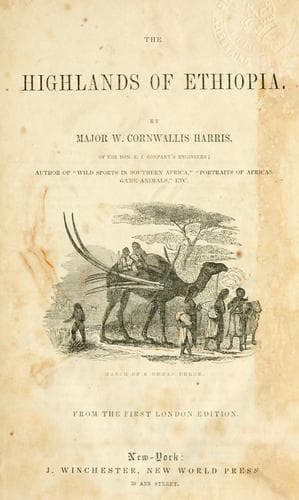
The Highlands of EthiopiaHarris, William Cornwallis, Sir
History
The Highlands of Ethiopia
Harris, William Cornwallis, Sir
Ethiopia -- Description and travel
Shortly after daybreak, wares of every description are displayed under
the canopy of heaven, and crowds of both sexes flocking to the stall of
the vendor, the din of human voices is presently at its height. Honey,
cotton, grain, and other articles of consumption, the produce of the
estate of the Amhara farmer, are exposed for sale or barter. The
Dankali merchant exhibits his gay assortment of beads, metals, coloured
thread, and glass ware. The wild Galla squats beside the produce of his
flocks, and the Moslem trader from the interior displays ostrich
feathers, or some other article of curiosity from the distant tribe.
Bales of cotton cloth, and bags of coffee from Caffa and Enarea, are
strewed in every direction. Horses and mules in numbers are shown off
among the crowd to increase the turmoil; nor is even the wandering
Hebrew wanting to complete the scene of traffic, haggling, and barter,
which continues, without intermission, until a late hour in the
afternoon, when the village relapses again into its wonted six days of
quiet and repose.
Swathed and folded in dirty cotton cloth, behold in the cultivator of
the soil the original of the Egyptian mummy. Greasy and offensive in
person and in habits, he moves cringingly to pay his tax to the governor
of the fair, who sits in conscious dignity upon a stone; and prostrating
himself with shoulders bared among the mud, the serf hands forth the
measure of grain from the leathern scrip, or scoops out the prescribed
meed of butter from the jar--the vassal token of permission enjoyed to
earn his bread by the unceasing hand of labour. No spark of
intelligence illumines his dull features; not a trace of independence
can be discovered in his slouching gait; and the cumbrous robe with
which he is invested would indeed seem far better adapted for the quiet
resting-place in the tomb, than for the bustling avocations of stirring
life.
Here swaggers a valiant gun-man of the king's matchlock guard. The
jealousy of the monarch forbids the removal of the primitive weapon from
the royal presence, but the white _herkoom_ feather floats in all the
pride of blood over clotted tufts moist with the beloved grease; and the
dark scowl and the lowering brow betoken the reckless cruelty which
stains the character of the band. But the man is a poor slave, and his
degraded state has entirely destroyed the few traits of humanity which
might have smiled upon his nativity.
The surly Adaiel brushes past in insolent indifference to examine the
female slaves in the wicker hut of the rover from the south. His
murderous creese ensures from the bystanders a high respect, which
frequent disasters in the low country has riveted on the heart of the
Amhara; and men turn in wonder to gaze upon the mortal who entertaineth
not a slavish adoration for the great monarch of Shoa.
Public-domain text, read in full here on John Shaqi.
Reviews
Reviews
No reviews yet
Be the first to share your thoughts on this work.
Elsewhere in the archive
Join the Discussion
Join the discussion
Sign in to leave a comment or review.
Sign InorCreate an account