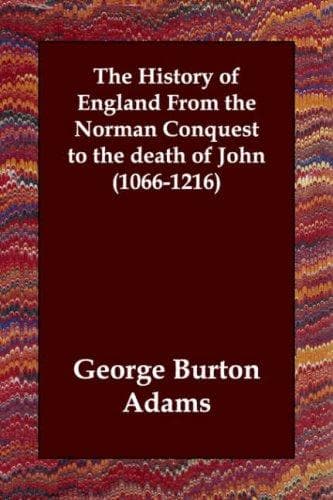
The History of England from the Norman Conquest to the Death of John (1066-1216)Adams, George Burton
History
The History of England from the Norman Conquest to the Death of John (1066-1216)
Adams, George Burton
Great Britain -- History -- Medieval period, 1066-1485
Edwin and Morcar, the great earls of north and middle England, heads of
the house that was the rival of Harold's, who seem to have been willing
to see him and his power destroyed, had now come in, having learned the
result of the battle. The two archbishops were there, and certain of the
bishops, though which they were we cannot surely tell. Other names we do
not know, unless it be that of Esegar, Harold's staller and portreeve of
London, the hero of a doubtful story of negotiations with the approaching
enemy. But other nobles and men of influence in the state were certainly
there, though their names are not recorded. Nor was a military force
lacking, even if the "army" of Edwin and Morcar was under independent and
not trustworthy command. It is clear that the tone of public opinion was
for further resistance, and the citizens were not afraid to go out to
attack the Conqueror on his first approach to their neighbourhood. But
from all our sources of information the fatal fact stands out plainly, of
divided counsels and lack of leadership. William of Malmesbury believed,
nearly two generations later, and we must agree with him, that if the
English could have put aside "the discord of civil strife," and have
"united in a common policy, they could have amended the ruin of the
fatherland." But there was too much self-seeking and a lack of
patriotism. Edwin and Morcar went about trying to persuade people that
one or the other of them should be made king. Some of the bishops appear
to have opposed the choice of any king. No dominating personality arose
to compel agreement and to give direction and power to the popular
impulse. England was conquered, not by the superior force and genius of
the Norman, but by the failure of her own men in a great crisis of her
history.
Public-domain text, read in full here on John Shaqi.
Reviews
Reviews
No reviews yet
Be the first to share your thoughts on this work.
Join the Discussion
Join the discussion
Sign in to leave a comment or review.
Sign InorCreate an account