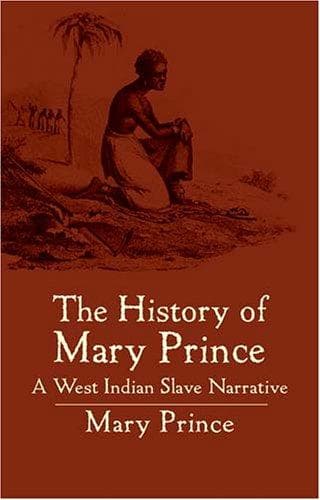
The History of Mary Prince, a West Indian Slave — John Shaqi
The History of Mary Prince, a West Indian SlavePrince, Mary
History
The History of Mary Prince, a West Indian Slave
Prince, Mary
Fugitive slaves -- West Indies -- Biography; Prince, Mary; Slavery -- West Indies
The way in which I made my money was this.--When my master and mistress
went from home, as they sometimes did, and left me to take care of the
house and premises, I had a good deal of time to myself, and made the most
of it. I took in washing, and sold coffee and yams and other provisions
to the captains of ships. I did not sit still idling during the absence of
my owners; for I wanted, by all honest means, to earn money to buy my
freedom. Sometimes I bought a hog cheap on board ship, and sold it for
double the money on shore; and I also earned a good deal by selling
coffee. By this means I by degrees acquired a little cash. A gentleman
also lent me some to help to buy my freedom--but when I could not get free
he got it back again. His name was Captain Abbot.
My master and mistress went on one occasion into the country, to Date
Hill, for change of air, and carried me with them to take charge of the
children, and to do the work of the house. While I was in the country, I
saw how the field negroes are worked in Antigua. They are worked very hard
and fed but scantily. They are called out to work before daybreak, and
come home after dark; and then each has to heave his bundle of grass for
the cattle in the pen. Then, on Sunday morning, each slave has to go out
and gather a large bundle of grass; and, when they bring it home, they
have all to sit at the manager's door and wait till he come out: often
have they to wait there till past eleven o'clock, without any breakfast.
After that, those that have yams or potatoes, or fire-wood to sell, hasten
to market to buy a dog's worth[10] of salt fish, or pork, which is a great
treat for them. Some of them buy a little pickle out of the shad barrels,
which they call sauce, to season their yams and Indian corn. It is very
wrong, I know, to work on Sunday or go to market; but will not God call
the Buckra men to answer for this on the great day of judgment--since they
will give the slaves no other day?
[Footnote 10: A dog is the 72nd part of a dollar.]
While we were at Date Hill Christmas came; and the slave woman who had the
care of the place (which then belonged to Mr. Roberts the marshal), asked
me to go with her to her husband's house, to a Methodist meeting for
prayer, at a plantation called Winthorps. I went; and they were the first
prayers I ever understood. One woman prayed; and then they all sung a
hymn; then there was another prayer and another hymn; and then they all
spoke by turns of their own griefs as sinners. The husband of the woman I
went with was a black driver. His name was Henry. He confessed that he had
treated the slaves very cruelly; but said that he was compelled to obey
the orders of his master. He prayed them all to forgive him, and he prayed
that God would forgive him. He said it was a horrid thing for a ranger[11]
to have sometimes to beat his own wife or sister; but he must do so if
ordered by his master.
Public-domain text, read in full here on John Shaqi.
Reviews
Reviews
No reviews yet
Be the first to share your thoughts on this work.
Join the Discussion
Join the discussion
Sign in to leave a comment or review.
Sign InorCreate an account