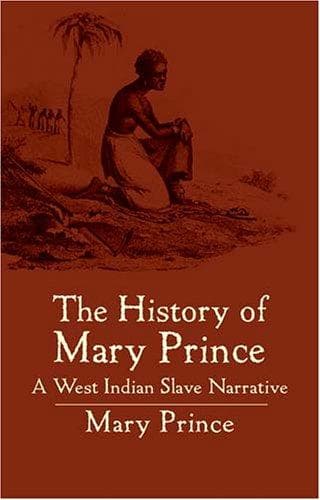
The History of Mary Prince, a West Indian SlavePrince, Mary
History
The History of Mary Prince, a West Indian Slave
Prince, Mary
Fugitive slaves -- West Indies -- Biography; Prince, Mary; Slavery -- West Indies
flickering streak of light in a gloomy picture, only serve by contrast to
exhibit the depth of the prevailing shades. Like other exceptions, they
only prove the general rule: the unquestionable tendency of the system is
to vitiate the best tempers, and to harden the most feeling hearts. "Never
be kind, nor speak kindly to a slave," said an accomplished English lady
in South Africa to my wife: "I have now," she added, "been for some time a
slave-owner, and have found, from vexatious experience in my own
household, that nothing but harshness and hauteur will do with slaves."
[Footnote 23: See Anti-Slavery Reporter, Nos. 5 and 16.]
[Footnote 24: Ibid, No. 44.]
[Footnote 25: Ibid, No. 47.]
[Footnote 26: Ibid, No. 64, p. 345; No. 71, p. 481.]
[Footnote 27: Ibid, No. 65, p. 356; No. 69, p. 431.]
[Footnote 28: Anti-Slavery Reporter, Nos. 66, 69, and 76.]
I might perhaps not inappropriately illustrate this point more fully by
stating many cases which fell under my own personal observation, or became
known to me through authentic sources, at the Cape of Good Hope--a colony
where slavery assumes, as it is averred, a milder aspect than in any other
dependency of the empire where it exists; and I could shew, from the
judicial records of that colony, received by me within these few weeks,
cases scarcely inferior in barbarity to the worst of those to which I have
just specially referred; but to do so would lead me too far from the
immediate purpose of this pamphlet, and extend it to an inconvenient
length. I shall therefore content myself with quoting a single short
passage from the excellent work of my friend Dr. Walsh, entitled "Notices
of Brazil,"--a work which, besides its other merits, has vividly
illustrated the true spirit of Negro Slavery, as it displays itself not
merely in that country, but wherever it has been permitted to open its
Pandora's box of misery and crime.
Let the reader ponder on the following just remarks, and compare the facts
stated by the Author in illustration of them, with the circumstances
related at pages 6 and 7 of Mary's narrative:--
"If then we put out of the question the injury inflicted on
others, and merely consider the deterioration of feeling and
principle with which it operates on ourselves, ought it not
to be a sufficient, and, indeed, unanswerable argument,
against the permission of Slavery?
"The exemplary manner in which the paternal duties are
performed at home, may mark people as the most fond and
affectionate parents; but let them once go abroad, and come
within the contagion of slavery, and it seems to alter the
very nature of a man; and the father has sold, and still
sells, the mother and his children, with as little
compunction as he would a sow and her litter of pigs; and he
often disposes of them together.
Public-domain text, read in full here on John Shaqi.
Reviews
Reviews
No reviews yet
Be the first to share your thoughts on this work.
Elsewhere in the archive
Join the Discussion
Join the discussion
Sign in to leave a comment or review.
Sign InorCreate an account