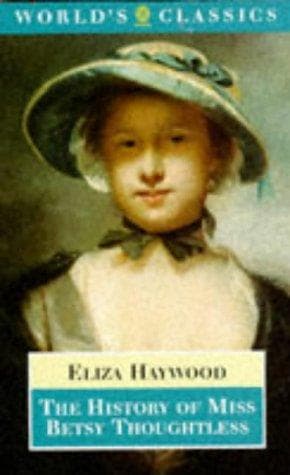
The History of Miss Betsy ThoughtlessHaywood, Eliza Fowler
General
The History of Miss Betsy Thoughtless
Haywood, Eliza Fowler
Abused wives -- Fiction; Bildungsromans; Didactic fiction; England -- Fiction; Married women -- Fiction
For such you still are, and ever must be, to my fond doating heart;
though I have too much cause to fear you cease to wish it--else why
this cruel absence? I have not seen you these three days!--an age
to one that loves like me. I am racked to death with the
apprehensions of the motives of so unexpected a neglect! If my
person or passion were unworthy your regard, why did you accept
them with such enchanting softness? And if ever I had any place in
your affection, what have I done to forfeit it? But, sure, you
cannot think of abandoning me!--of leaving me to all the horrors of
despair and shame!--No! it is impossible! Ingratitude consists not
with that strict honour you pretend to; and that, I still flatter
myself, you are in reality possessed of. You may have had some
business: but how poor a thing is business when compared with love!
And I may reply, with our English Sappho, in one of her amorous
epistles--
"Business you feign; but did you love like me,
I should your most important business be."
But whither does my hurrying spirits transport me! If I am still so
happy to retain any share of your heart, I have said too much; if I
am not, all I can say will be ineffectual to move you. I shall,
therefore, only tell you that I can live no longer without seeing
you, and will call on you at the coffee-house this evening about
eight; till when I am, though in the utmost distraction, my dear,
dear Trueworth, your passionately tender, and devoted servant,
F. MELLASIN.
P.S. Having heard you say letters were left for you at this place,
and that you stepped in once or twice every day, I thought it more
proper to direct for you here than at your own lodgings. Once more
adieu.--Do not fail to meet me at the hour.'
Scarce could the ghost of a forsaken mistress, drawing his curtains at
the dead of night, have shocked Mr. Trueworth more than this epistle. He
had, indeed, done no more than any man of his age and constitution would
have done, if tempted in the manner he had been; yet he reproached
himself severely for it. He knew how little this unhappy creature had
her passions in subjection; and, though all the liking he ever had for
her was now swallowed up in his honourable affections for Miss Harriot,
yet he was too humane and too generous not to pity the extravagance of a
flame he was no longer capable of returning. He wanted her to know there
was a necessity for their parting; but knew not how to do it without
driving her to extremes! He hated all kind of dissimulation; and, as
neither his honour nor his inclinations would permit him to continue an
amorous correspondence with her, he was very much at a loss how to put
an end to it, without letting her into the real cause; which, as yet,
he thought highly improper to do.
Public-domain text, read in full here on John Shaqi.
Reviews
Reviews
No reviews yet
Be the first to share your thoughts on this work.
Elsewhere in the archive
Join the Discussion
Join the discussion
Sign in to leave a comment or review.
Sign InorCreate an account