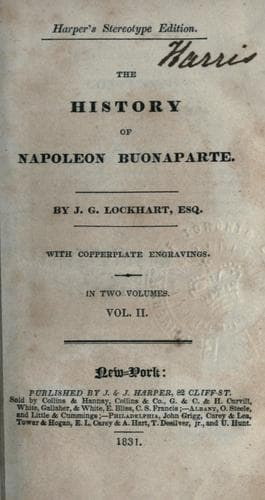
The History of Napoleon BuonaparteLockhart, J. G. (John Gibson)
History
The History of Napoleon Buonaparte
Lockhart, J. G. (John Gibson)
France -- Kings and rulers -- Biography; Napoleon I, Emperor of the French, 1769-1821
of the royalists were in a high state of excitement.
Meantime, among the meaner orders of both the great parties, who
regarded with aversion the sovereign authority of the Chief Consul,
there wanted not hearts wicked enough, nor hands sufficiently desperate,
for attempts far different from these. The lawfulness, nay, the merit
and the glory of tyrranicide, were ideas familiar to the Jacobins of
every degree; and, during the years of miserable convulsion which
followed the imprisonment and murder of Louis XVI., the royalist bands
had often been joined, and sometimes guided, by persons in whom a
naturally fanatical spirit, goaded by the sense of intolerable wrongs,
dared to think of revenge--no matter how accomplished--as the last and
noblest of duties: nor is it wonderful that amidst a long protracted
civil war, when scenes of battle and slaughter were relieved only by the
hardships of skulking in woods and the fears of famine, the character of
others, originally both pure and gentle, had come to be degraded into a
callous indifference of dark sullenness of temper, fit preparatives for
deeds, the thought of which, in earlier and better days, would have been
horror and loathing.
It was among the Jacobins, who had formerly worshipped Buonaparte as the
"child and champion" of their creed, that the first schemes of
assassination were agitated. An Italian sculptor, by name Ceracchi, who
had modelled the bust of Napoleon while he held his court at
Montebello, arrived in Paris, and, under pretence of retouching his
work, solicited admission to the presence of the new Cæsar, whose Brutus
he had resolved to be. The occupations of the Consul did not permit of
this, and the Italian, having opened his purpose to Topineau, Lebrun, a
painter, the adjutant-general Arena, Damerville, and others of kindred
sentiments, arranged a plan by which Buonaparte was to have been
surrounded and stabbed in the lobby of the opera house. But one of the
accomplices betrayed the conspiracy; and Ceracchi and his associates
were arrested in the theatre, at the moment when they were expecting
their victim.
Public-domain text, read in full here on John Shaqi.
Reviews
Reviews
No reviews yet
Be the first to share your thoughts on this work.
Elsewhere in the archive
Join the Discussion
Join the discussion
Sign in to leave a comment or review.
Sign InorCreate an account